Why You Keep Losing an Erection During Sex and What You Can Do
Share
It usually doesn’t happen out of nowhere…things are going well, you’re aroused, you’re completely engaged, and then suddenly your body stops cooperating the way that you expect it to. Your mind notices this immediately, and that quick moment of noticing can change everything. Your thoughts may start racing, your body can tighten up, and what started off as a good experience begins to feel stressful instead. If you keep losing an erection during sex, you are not alone, and there are clear causes and solutions.
This situation is a lot more common than most people realize. Many men experience losing an erection during sex at some point in their lives, and often more than once. The biggest part of the problem is not the moment itself, but what happens next. When panic and worry sets in, the body changes into a state of stress response, which means that your blood flow changes, your muscles get tenser, and the very systems that are supposed to encourage an erection start to shut down. That reaction isn’t some kind of a flaw, it’s biology itself doing exactly what it’s designed to do when you’re under pressure.
But for many men, at this moment shame can creep in, and the fear of it happening again can cause the cycle to repeat itself. It’s important to understand that this experience isn’t a personal failure, and it isn’t a reflection of how attracted you are to someone, your masculinity, or your level of desire. It’s a sign that something in your mind-body system needs a bit of extra support or adjustment.
At DoctorAdam, we take a science-first approach to understanding what’s really happening in your body. When you understand how erections work, why stress sometimes interferes, and what your body needs in order to stay relaxed and responsive, this issue becomes something that you can easily address - instead of something that controls you and your sex life.
What Is an Erection and How Does it Work?
Did you know that an erection isn’t just about the penis? It’s actually the result of a complex chain of signals that starts in your brain, moves through your nervous system, and ends with specific blood flow changes in your body. That means that an erection during sex isn’t only a physical reaction, it’s very deeply related to how relaxed and mentally present you feel.
It all begins with the brain. When you feel sexually stimulated (whether that’s from touch, thoughts, or an emotional connection) your brain sends signals down the spinal cord to the blood vessels in the penis. Those signals release a substance called nitric oxide, which is a chemical messenger that tells the blood vessels to relax and open up. When those vessels open, more blood flows in, and pressure traps that blood inside the erectile tissue, creating and maintaining the erection.
But, here’s the catch…this entire system depends on the body being in a relaxed state. If you’re feeling anxious, stressed out, or distracted in any way, your nervous system can shift into fight-or-flight mode instead. When that happens, blood gets redirected to other parts of the body, and your erection disappears. That’s why losing an erection during sex can happen even when everything else feels fine at the start.
How Common It Is to Lose an Erection
If you’ve ever experienced losing an erection during sex, you might have wondered if something’s wrong with you, or if this is something that happens to other men as well. The truth of the matter is, this is one of the most common sexual health concerns for men, and it happens to men of all ages.
Younger men often think that this is something that only shows up later on in life, but studies show that a surprising number of men under 40 experience occasional or even recurring erection issues. By the time that men reach their 40s, 50s, and beyond, the numbers continue to steadily increase. That means erection problems in men are more the norm than the exception.
It’s also really important to separate temporary issues from ongoing ones. One, single episode can happen because of immediate stress, excess fatigue, alcohol consumption, or even just a fleeting moment of distraction. That doesn’t mean that there’s a long-term problem going on. But if it starts happening regularly (or if it creates feelings of worry that are affecting future intimacy) it might be time for you to take a deeper look into what’s going on.
The Physical Reasons Erections Fade
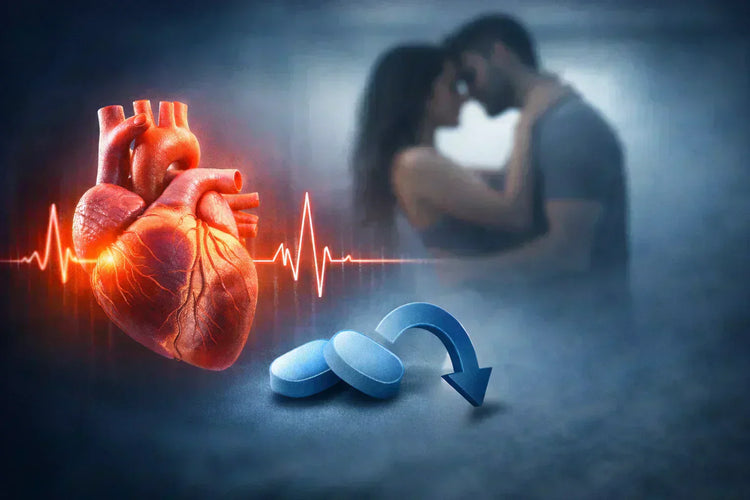
[Image showing the role of blood vessels and nitric oxide in erectile health]When we talk about losing an erection during sex, the body plays just as big of a role as the mind does. As we mentioned earlier, erections depend on good blood flow, balanced hormones, and having clear communication between your brain and your body. When any part of that system isn’t working quite the way that it’s supposed to, the result can show up right away.
Good blood flow is the foundation of an erection. When your arteries are healthy and open, blood can flow into the penis and stay there long enough to create pressure, and therefore an erection. But, if those vessels are narrowed, because of high blood pressure, high cholesterol, smoking, or diabetes, that blood flow is reduced. This is one of the most common erectile dysfunction causes, and it’s often closely linked to your level of cardiovascular health.
Hormones (especially testosterone) also play a role. Testosterone doesn’t just affect your level of desire, it also boosts the body’s ability to respond sexually. If your levels are low, your physical response may be weak or inconsistent.
Medications can also be a part of the issue. Certain antidepressants, blood pressure drugs, or other prescriptions can interfere with nerve signals or blood flow. Plus, alcohol, nicotine, and other recreational substances can also make it a lot harder to keep up an erection once it starts.
And finally, nervous system disorders or injury can have an impact on the body’s ability to send signals and have them reach the right places at the right time. When understanding why erections fail, it’s important to know that there are so many systems that have to work in sync, and it only takes one weak link in the chain to disrupt everything.
The Psychological Side of Erections
Sometimes, the biggest reason that you’re losing an erection during sex has nothing to do with blood flow or hormones. Instead it all comes down to what’s happening in your mind. Remember, erections don’t just start in the body - they begin in the brain, and that’s where things can either move forward…or completely shut down.
This is where psychological erectile dysfunction comes in. When there’s any level of anxiety, pressure, or mental distraction involved, the brain can activate its “fight-or-flight” response instead of the “rest-and-connect” state that is needed for intimacy. This pulls your body away from arousal and into alert mode, which makes it almost impossible for you to stay in the moment physically.
Performance pressure plays a very big role here. If you’ve had a past experience where things didn’t go quite as planned, your brain might hold onto that memory. Then the next time you're intimate, your mind kicks into worry mode…even before anything has happened. That fear of it happening again can become a self-fulfilling pattern.
Performance anxiety and ED often go hand in hand for this very reason. Your body might be ready, but your mind has already hit the brakes.
Distraction is another big issue. If your brain is focused on whether you’re “doing it right,” if your partner’s satisfied, if you’ll be able to stay hard, or on anything else that’s going on in your life right now, it’s no longer focused on pleasure. And without that level of mental presence, the body follows suit, and becomes distracted as well.
The good news is, these patterns can be changed. You’re not stuck like this. There are proven tools that can help move your brain back into a state where connection, arousal, and performance feel completely natural again.
Why Erections Often Fail During Sex (Not Before)
Even if things start off just fine, there are a few common reasons why an erection during sex doesn’t last. It usually all comes down to how your brain, emotions, and environment are reacting in the moment. Here’s are some of the most common reasons that our patients talk about:
- Performance pressure builds mid-way: At the start, you’re excited. But once sex begins, the pressure to “keep it up” kicks in.
- You start monitoring yourself: Instead of enjoying the moment, your brain starts tracking how long your erection is lasting. This is something called “spectatoring.”
- You lose presence and connection: If your thoughts drift away, it can break the feedback loop between your brain and your body.
- Anxiety kicks in once you're in the spotlight: Suddenly, it feels like there’s something to prove, blocking the blood flow needed.
- You’re too focused on the “goal”: When sex becomes more about reaching a goal (like orgasm), your body reads that as too much pressure.
- Emotional or relationship dynamics: Small things like unresolved tension can affect your arousal state without you even realizing it.
- Physical touch isn’t aligned with arousal: Sometimes, the physical stimulation isn’t matching what your brain needs to stay turned on.
- Subtle hormonal or blood flow shifts: Stress messes with an otherwise healthy erection if your nervous system moves out of its relaxed state.
At DoctorAdam, we need you to understand that each of these reasons has absolutely nothing to do with your “manhood” or your sexual ability, and has everything to do with how complicated the arousal process really is. This is the first step to making changes that actually help.
How Sildenafil and Tadalafil Work - and Which One Might Be Right for You
There are a lot of different ED treatment options out there, but two of the most trusted and widely prescribed are sildenafil for ED and tadalafil for ED. These medications are in a class of drugs known as PDE5 inhibitors. That means they work by blocking an enzyme in your body that normally restricts blood flow. When that enzyme is blocked, your blood vessels can open up more easily, which is exactly what you want when you're trying to maintain a strong, steady, ongoing erection.
Now, it’s important to know that these medications don’t create desire out of thin air. You still need sexual stimulation and arousal in order for them to work. But what they do is help your body respond better when your brain says, “let’s go.” You can think of them like turning up the volume on a signal that your body is already trying to send.
Sildenafil for ED is usually taken as-needed, about 30 to 60 minutes before sex. It has a shorter window of action, typically around 4 to 6 hours. That’s why it’s a good fit for those who want something that works fast and is flexible.
Tadalafil for ED, on the other hand, stays active in your system much longer…for up to 36 hours. Some people take it daily in a lower dose to keep things more spontaneous. Others like the weekend-ready option it gives them. That’s why a lot of people call it the “anytime” pill.
Both of these medications have a very good safety track record, but they can still cause issues. Side effects like headache or stuffiness can happen with either one. That’s why we always help you through the choice and check what works best for your lifestyle, your health history, and your sexual rhythm.
Other Ways to Improve Your Erection
- Lower your stress levels - breathwork, mindfulness, therapy, or exercise.
- Prioritize good quality sleep - make it your goal to get 7–9 hours of uninterrupted sleep every night.
- Stay physically active - Movement improves your circulation and naturally increase your testosterone levels.
- Keep communication open with your partner - Talking about your needs and your fears takes the pressure off.
- Address any hormonal imbalances - We check for these factors in our personalized ED treatment options.
Frequently Asked Questions
What causes low erection?
There are many different erectile dysfunction causes, and they usually fall into İki different categories: physical and psychological. Physically, issues like poor blood flow... Psychologically, stress, low self-esteem, or trauma can also interfere.
Why does a guy keep losing his erection?
Losing an erection during sex can happen for lots of different reasons. Sometimes it’s about blood flow or nerves, but often, it’s a mental thing.
Why can't I get an erection?
It might be low testosterone, vascular health, medications, or anxiety.
At what age do guys have trouble getting hard?
It can happen at any age, but it’s more common after 40.
What are the early warning signs of ED?
If you start noticing inconsistent erections, shorter-lasting erections, or less frequent morning erections.
Can ED be cured?
Yes, in many cases it can be improved or fully resolved.
How do I help my husband with erectile dysfunction?
Start by talking about it openly and without any pressure.
How does a man feel when he has ED?
It can be frustrating, isolating, or even shame-inducing.
Let’s Stop Pretending This Isn’t Happening - We Can Help
Let’s be honest - no one talks about losing an erection during sex until it happens... it’s fixable, and it’s a lot more common than you probably think.
Erections are both physical and emotional. They depend on proper blood flow, good hormone balance, and a certain level of mental calm all working together.
At DoctorAdam, we take a full-body, full-life view of sexual health. We look at your hormones, circulation, stress, sleep, relationship dynamics, and your goals.
If you’ve been struggling with losing an erection during sex, it’s time to get answers that actually help. Book a consultation, explore your options, and let us help you feel good in your body again. You deserve that, and we’re here for you. Contact us today.
Medical & Legal Disclaimer
The information provided in this article is for educational and informational purposes only and is not intended as medical advice, diagnosis, or treatment. The content should not be used as a substitute for professional medical advice from a licensed healthcare provider.
About the Author
Shelby Leith is an experienced medical writer with deep roots in pharmacy and a real passion for helping people gain a deeper understanding of their health. With over 26 years as a Registered Pharmacy Technician and specialized training in diabetes education, she knows how to strike a balance between clinical accuracy and what actually has an impact on everyday life. Shelby also brings firsthand insight into diet, nutrition, supplementation, and performance through her experience as a two-time amateur bodybuilding competitor.