



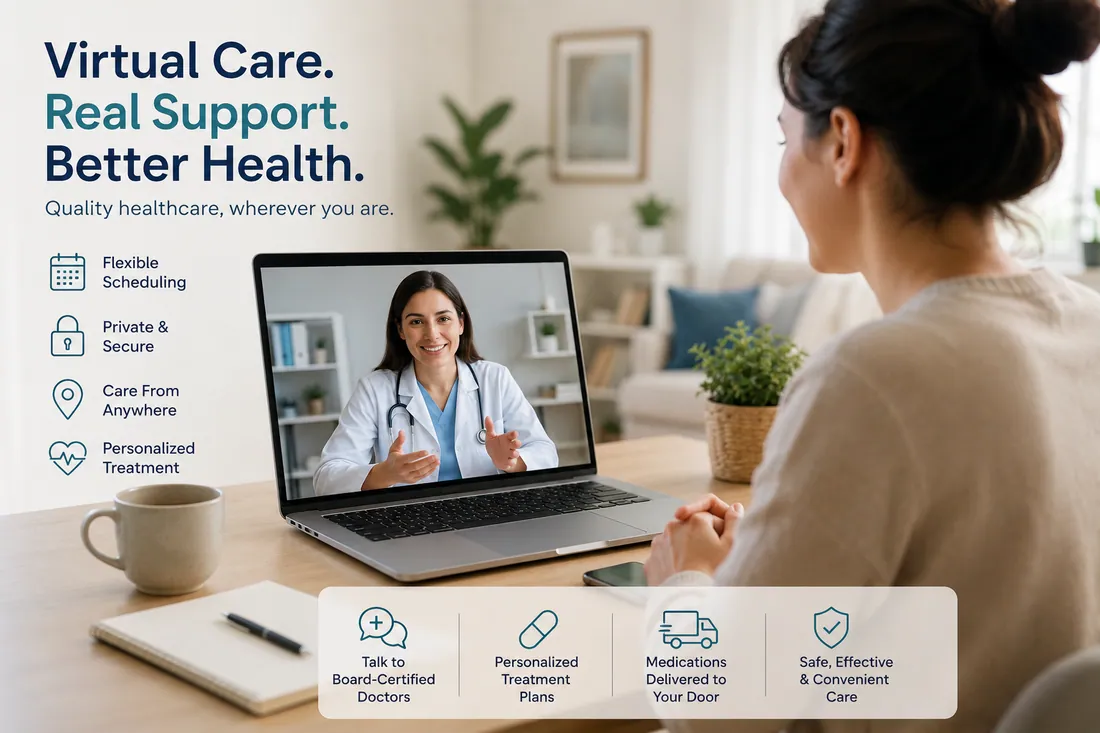
Why More People Are Choosing Telehealth for Healthcare
Why More People Are Choosing Telehealth Services
When was the last time getting medical care felt easy? For most of us, healthcare has always come with a side of stress. Whether it’s the scheduling, the waiting, or the rushing across town for an appointment that lasts less than 15 minutes. That is exactly why more people are choosing telehealth for their healthcare.
But something has been changing. More and more people are discovering that quality care doesn’t have to be complicated. Telehealth services aren’t just for convenience. For many, it’s becoming a lifeline.
Through secure video calls, messaging platforms, and online assessments, virtual care platforms now offer highly convenient and accessible ways to help manage your health. You can now receive diagnoses, customized treatment plans, and even prescription medications delivered directly to your door.
Here, we will explore the core reasons more people are choosing telehealth. From convenience to savings, we will cover everything you need to know about why telehealth and virtual care are the future of personal wellness.
Key Takeaways
- Convenience and accessibility: Telehealth eliminates the need for travel, bringing healthcare services directly to patients regardless of their location.
- Improved privacy: Virtual care offers a discreet option for addressing sensitive health issues, ensuring patient comfort and confidentiality.
- Breaking geographical barriers: Patients in remote or underserved areas can access specialized healthcare professionals without distance constraints.
- Time and cost efficiency: Telehealth reduces the time spent commuting and waiting, while also minimizing healthcare costs for both patients and providers.
The Convenience Factor: Healthcare at Your Fingertips
The main reason most people choose telehealth is convenience. Traditional doctor visits often require taking time off work, securing childcare, and navigating through endless hours of traffic, only to spend a couple of minutes speaking with a physician.
Telehealth flips this model, placing the patient’s schedule and comfort first.
Removing Geographical Barriers
For many, simply getting to a doctor’s office is a hurdle. Telehealth removes these geographical barriers. Patients can access specialized care and consult with top-tier, board-certified physicians regardless of their physical location.
This is particularly beneficial for those seeking specific treatments that might not be available at their local clinic. Platforms like DoctorAdam provide access to US-licensed doctors across all 50 states, ensuring that high-quality care is never out of reach.
Telehealth platforms respect your time. It eliminates commute times, parking struggles, and the hours spent in waiting rooms. You can schedule appointments during a lunch break or from the comfort of your home.
Many online clinics also offer asynchronous care, where patients complete a comprehensive online medical assessment at their own pace, and a physician reviews the information shortly afterward. This allows patients to receive prompt medical attention and get back to their daily lives quickly.
Comfort, Privacy, and Discretion
Discussing certain health concerns in a clinical setting can be intimidating. Telehealth offers a sense of comfort by allowing patients to receive care from the privacy of their own homes.
This discretion is incredibly valuable for sensitive topics, such as sexual wellness or weight management. Additionally, patients receive their prescription medication directly to their doorstep in discreet packaging, providing another layer of privacy that you cannot get in traditional pharmacies.
Cost-Effectiveness: Making Healthcare More Affordable
Healthcare costs remain a significant concern for many patients. Telehealth offers several cost-saving options, making essential medical treatments more accessible to a broader population.
Reduced Indirect Expenses
The financial benefits of virtual care extend beyond the actual medical bill. By consulting with a doctor online, patients save money on transportation, gas, and parking fees. They also avoid the lost wages from taking a half-day off work or the added expense of hiring a babysitter.
These indirect costs quickly add up, making remote consultations a highly cost-effective alternative for routine care and ongoing treatment management.
Prioritizing Preventive Care
Easier access to medical professionals encourages patients to seek help earlier rather than waiting for a condition to worsen. This proactive approach leads to earlier diagnosis and less costly interventions down the line.
When patients can easily message a doctor for a quick video check-in, they are more likely to stay on top of their health goals, such as managing blood pressure or adhering to a weight loss program.
Transparent Pricing and Accessibility
While insurance coverage for telehealth services is constantly expanding, many platforms are adopting a direct-to-consumer model that bypasses the complexities of insurance altogether.
For example, at DoctorAdam, we offer flat monthly pricing without hidden fees, and we don’t require insurance. This transparent pricing structure allows patients to budget effectively for their healthcare needs, knowing exactly what their treatment plans and medication deliveries will cost each month.
Expanding Access to Specialized Care
Telehealth is a powerful tool for connecting patients with specialists who have the exact expertise they need, helping overcome local shortages of medical professionals.
Bridging the Gap in Rural Areas
People living in rural or underserved places often face long travel times to reach the nearest hospital or clinic. Telehealth services help bridge this gap, bringing expert medical care to populations that have historically been left behind.
A patient living miles away from an urban center can now access the exact same board-certified physicians and FDA-approved treatments as someone living in a major city.
Enhancing Chronic Disease Management
Managing chronic conditions like obesity, diabetes, and hypertension requires consistent monitoring and regular check-ins. Telehealth improves the management of these conditions through remote monitoring and virtual follow-ups.
For example, patients using weight loss treatments like semaglutide or tirzepatide can easily check in with their medical provider to track progress, adjust dosages, and receive ongoing lifestyle guidance. This continuous support is crucial for achieving sustainable, long-term health outcomes.
The Benefits of Technological Advancements
The rapid growth of telehealth services wouldn’t be possible without significant technological advancements. Modern telehealth platforms are built to be intuitive, secure, and highly effective at facilitating medical care.
User-Friendly Healthcare Platforms
The days of clunky, difficult-to-navigate medical portals are now fading. Today’s telehealth platforms prioritize user experience.
Patients can easily complete medical intake forms, upload photos, and communicate with their healthcare team through user-friendly dashboards. The process is designed to be as straightfowrwad are ordering groceries only, needing only a smartphone or computer.
Wearable Tech and Remote Monitoring
The integration of wearable technology, like smartwatches, fitness trackers, and remote pressure and glucose monitoring, allows patients to collect important health data.
This can be shared with telehealth providers, giving doctors a comprehensive view of the patient’s daily health metrics. This can help provide highly personalized and precise medical interventions.
Ensuring Data Security and Privacy
With the digitalization of health records, data security is important. Reputable telehealth providers invest in heavily secure, HIPAA-compliant platforms to protect patient confidentiality.
All medical assessments, communications, and treatment plans are encrypted and stored safely. Patients can trust that their sensitive personal information is with the highest levels of cybersecurity available.
FAQs
Is telehealth secure?
Yes, telemedicine platforms are made with strict privacy protocols and encryption to protect patient information. Regulatory guidelines, such as HIPAA, ensure that data is handled securely.
Is telehealth covered by insurance?
Most insurance providers, including Medicare and Medicaid, cover telemedicine services. However, coverage details may vary depending on the provider and the specific plan.
How do I prepare for a telehealth appointment?
Find a quiet and private space, ensure you have a reliable internet connection, and have any necessary documents or medical history at hand. Also, test your device and platform beforehand to avoid technical issues.
Embracing Telehealth Options
The shift toward virtual healthcare represents a big step forward in making medical treatments more patient-centric. By breaking down the traditional barriers of time, locations, and cost, telehealth empowers people to take control of their well-being on their own terms.
The ability to access licensed medical professionals, secure necessary prescriptions, and receive ongoing support from the comfort of home is a big improvement over an outdated clinic model.
Whether you are looking for a doctor-approved weight-loss plan, discreet solutions for sexual wellness, or simply a more efficient way to manage your health, virtual care provides a modern, reliable solution.
The convenience, privacy, and transparent pricing offered by platforms like DoctorAdam make it easier than ever to prioritize your health. Take the first step toward a healthier, more confident you.

Article Reviewed By
Brenda Peralta, Registered Dietitian Nutritionist (RDN) & Certified Diabetes Educator (CDE)






1 comment
omar123123123