Low energy after 40: what we know about NAD+ and healthy aging

Feeling more tired in midlife is common, but it has many possible causes. Sleep problems, anemia, thyroid disease, depression, medication effects, metabolic disease, hormonal changes, and reduced physical activity can all contribute.
Feeling more tired in midlife is common, but it has many possible causes. Sleep problems, anemia, thyroid disease, depression, medication effects, metabolic disease, hormonal changes, and reduced physical activity can all contribute.
NAD+ (nicotinamide adenine dinucleotide) has attracted attention because it is central to cellular metabolism and its biology changes with age. Supplements containing NAD+ precursors such as nicotinamide riboside (NR) and nicotinamide mononucleotide (NMN) can increase NAD±related metabolites in humans. What remains uncertain is whether doing so produces meaningful improvements in energy, physical function, or the aging process.
Explore NAD+ Longevity Options
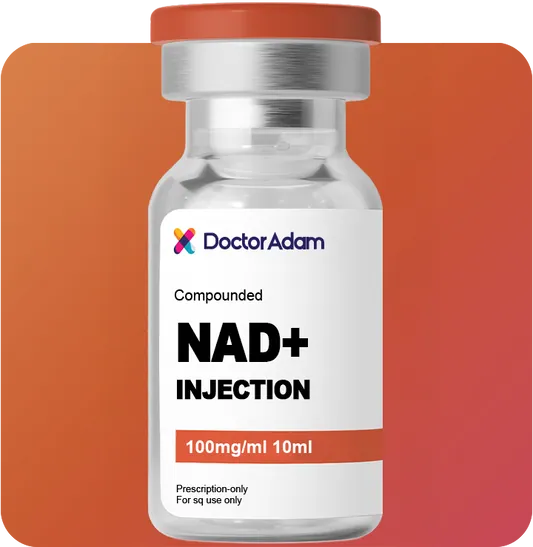
DoctorAdam offers several provider-guided NAD+ formats. The article below explains why changes in NAD+ biomarkers should not be confused with proven treatment of fatigue or reversal of aging.
What NAD+ does
NAD+ is a coenzyme involved in numerous cellular reactions. It can accept electrons during oxidation-reduction reactions, becoming NADH. NADH can then transfer those electrons through pathways involved in mitochondrial ATP production.
NAD+ also participates in several processes unrelated to direct energy transfer. Sirtuins use NAD+ in reactions involved in cellular signaling and regulation of gene expression. PARP enzymes consume NAD+ during some forms of DNA-damage response.
NAD+ metabolism therefore sits at the intersection of energy metabolism, DNA repair, cellular signaling, and other processes relevant to aging.
The amount of NAD+ in human tissues appears to change with age, but the size and consistency of that change are less certain than popular accounts often suggest. A 2025 review in Nature Metabolism found that clear age-related declines in NAD+ had been demonstrated in only a limited number of human studies. Measurements also vary between tissues and experimental methods, making it difficult to assign a single percentage decline to “NAD+ levels with age.”
Can increasing NAD+ improve energy?
The strongest human evidence concerns biochemical effects rather than symptoms.
Oral NAD+ itself is not the main approach used in clinical research. Most studies have examined precursors, particularly NR and NMN, which enter pathways that can increase NAD+ availability.
For example, randomized trials of NR have shown increases in NAD±related metabolites after supplementation. NMN has produced similar biochemical effects in several trials. These findings establish that the compounds can engage NAD+ metabolism in humans.
That does not establish that they treat fatigue.
A 2026 systematic review in Ageing Research Reviews identified 33 human intervention studies within a total of 113 eligible human and animal studies. In humans, oral NR and NMN consistently increased NAD±related biomarkers and were generally well tolerated over periods of weeks to months. Effects on metabolic, vascular, physical-performance, and other health-related outcomes were inconsistent and often absent. The review concluded that clinical effectiveness for anti-aging and wellness outcomes remains inconclusive.
A 2025 review in Nature Metabolism reached a similar conclusion. Human evidence for NAD+ precursor supplementation remains limited, and results from animal models cannot be assumed to apply directly to human aging.
For someone with unexplained fatigue, that distinction matters clinically. Increasing a biochemical marker is not the same as correcting the cause of fatigue.
Oral NR and NMN
NR and NMN have been tested in a range of human trials. Short-term studies generally report good tolerability, although adverse effects such as gastrointestinal symptoms, headache, or nausea can occur.
The doses used in studies vary considerably. NR has been studied at doses ranging from hundreds of milligrams per day to 2,000 mg per day. NMN trials have generally used lower doses, although studies have reached approximately 1,200 mg per day.
These study doses should not be interpreted as recommended doses for the general population. Most trials have been relatively small and short, and long-term clinical benefits and risks remain uncertain.
Supplement regulation also differs from drug regulation. FDA does not approve dietary supplements for safety and effectiveness before they are marketed. NMN has been the subject of FDA regulatory correspondence and new-dietary-ingredient notifications, but the presence of an ingredient in the supplement marketplace should not be interpreted as FDA approval to treat a disease.
IV NAD+ therapy
Intravenous NAD+ is a different proposition from oral NR or NMN.
The 2026 systematic review found no eligible clinical-outcomes trials evaluating intravenous or intramuscular NAD+ itself for anti-aging or wellness indications. A separate 2026 pilot study of commercially administered IV NAD+ reported moderate to severe gastrointestinal symptoms, increased heart rate, and chest pressure during infusions. The study was exploratory and small, so it cannot establish whether IV NAD+ provides a clinical benefit.
There are also quality and sterility concerns with compounded injectable products. FDA has warned compounders that food-grade NAD+ is not appropriate for preparing sterile injectable drugs because of the potential for microbial and endotoxin contamination. FDA has also reported adverse events associated with compounded NAD+ products and has taken enforcement action involving a compounded NAD+ lot containing excessive bacterial endotoxins.
For these reasons, the evidence supporting IV NAD+ for healthy aging is substantially weaker than the marketing surrounding it. An injectable treatment also introduces risks that do not arise from simply taking an oral supplement.
Does NAD+ work differently in men and women?
Current human trials do not provide strong evidence for clinically important sex-specific effects of NR or NMN.
NAD±dependent metabolic pathways operate in both sexes, but that does not mean every response to supplementation will be identical. Many trials have not been designed or powered to detect meaningful differences between men and women, and subgroup reporting is inconsistent.
Fatigue associated with hormonal changes also deserves separate consideration. Perimenopause and menopause can affect sleep, mood, thermoregulation, body composition, and metabolic health. In men, changes in testosterone can contribute to alterations in energy, sexual function, and muscle mass. Those conditions should not automatically be attributed to NAD+ metabolism.
How much NAD+ precursor should you take?
There is no established daily recommended dose of NAD+ for healthy aging.
Published trials provide a range of research doses rather than a clinical dosing guideline. Nicotinamide has also been studied in a variety of clinical contexts, but it is a different compound and should not be treated as interchangeable with NR or NMN.
The dose used in a trial also depends on the study population, duration, formulation, and outcome being measured. A dose tolerated by healthy volunteers does not necessarily make sense for someone with a medical condition or for long-term use.
People taking prescription medicines, or those with significant liver or kidney disease, should discuss supplementation with a clinician. Safety data are also limited in pregnancy and breastfeeding.
What NAD+ cannot tell you about aging
It is tempting to interpret age-related changes in NAD+ as evidence that NAD+ decline causes aging and that restoring NAD+ will therefore reverse it. Human evidence does not support that conclusion.
NAD+ metabolism is regulated by several enzymes and pathways, including NAMPT and CD38, and it interacts with broader metabolic and cellular systems. Sleep, physical activity, diet, inflammation, disease, and other factors also influence metabolism.
Two people of the same age can therefore have different metabolic health and different NAD+ biology. Increasing NAD+ with a supplement does not remove the factors that may be contributing to fatigue or poor health.
The practical implication is straightforward: NAD+ supplementation should be considered an experimental or adjunctive strategy rather than a substitute for identifying an underlying medical problem.
What to do about low energy after 40
Persistent fatigue deserves attention before assuming that an age-related supplement deficiency is responsible.
Regular physical activity has substantially stronger evidence for maintaining cardiometabolic and functional health than NAD+ supplementation. A useful target for many adults is at least 150 minutes of moderate-intensity aerobic activity each week, combined with resistance training on at least two days.
Protein intake should be adequate for maintaining muscle mass, particularly as muscle loss becomes more relevant with age. Nutritional deficiencies such as iron or vitamin B12 deficiency can also contribute to fatigue and should be assessed when the clinical history suggests them rather than assumed to be present.
Sleep deserves the same attention. Maintaining a consistent sleep schedule, limiting alcohol close to bedtime, and addressing chronic sleep restriction can improve daytime functioning. Loud snoring, witnessed pauses in breathing, morning headaches, or excessive daytime sleepiness should raise the possibility of obstructive sleep apnea.
Stress can contribute to poor sleep and fatigue, but it should not automatically be treated as the explanation. Persistent symptoms warrant assessment for other causes.
When fatigue should be medically evaluated
New or progressive fatigue is worth discussing with a clinician, particularly when it persists despite adequate sleep and normal activity.
The evaluation depends on the history and examination. Possible causes include anemia, thyroid disease, sleep apnea, depression, medication effects, metabolic disease, nutritional deficiency, hormonal disorders, infection, and other medical conditions.
Symptoms such as unexplained weight change, significant weakness, shortness of breath, neurological changes, abnormal bleeding, persistent fever, or other new systemic symptoms make an underlying medical cause more important to investigate.
A supplement trial should not delay that evaluation.
How to approach age-related low energy
At DoctorAdam, the starting point for persistent fatigue is assessment rather than assuming a single cause. That may include reviewing symptoms, medical history, medications, sleep, lifestyle factors, and relevant laboratory testing.
When a specific condition is identified, treatment can be directed toward that cause. If an NAD+ precursor is being considered, the discussion should include what human studies have actually demonstrated, what remains uncertain, and the limitations of the available safety data.
Some presentations require an in-person examination or specialist assessment, particularly when neurological, endocrine, cardiovascular, or other significant findings are present.
What to expect if you try an NAD+ precursor
NR and NMN can raise NAD±related biomarkers within weeks of starting supplementation. That biochemical response is more predictable than a change in how someone feels.
There is currently no reliable timeline for an improvement in fatigue because clinical trials have not consistently demonstrated such a benefit. A person who notices more energy after starting a supplement may be experiencing a genuine effect, a placebo response, normal variation in symptoms, or a change in another part of their routine.
If fatigue continues or worsens, increasing the dose is not necessarily the appropriate next step. Reassessing the underlying cause is usually more informative.
Frequently asked questions
Can NAD+ supplements cure fatigue?
No. Fatigue has many possible causes, and current human trials do not establish NAD+ precursors as a treatment for fatigue. NR and NMN reliably increase NAD±related biomarkers, but improvements in energy and other clinical outcomes have been inconsistent.
What is a safe NAD+ dose per day?
There is no established recommended daily dose for NAD+ supplementation for healthy aging. Clinical trials have studied a wide range of NR and NMN doses, generally over relatively short periods. Trial doses should not be treated as individualized prescribing recommendations.
Are NAD+ benefits different for men and women?
There is not enough human evidence to establish clinically important sex-specific effects. Hormonal changes associated with menopause or declining testosterone can cause symptoms that overlap with those attributed to NAD+ and should be evaluated separately.
Is IV NAD+ safer or more effective than oral supplements?
There is no good evidence that IV NAD+ is more effective for healthy aging. The 2026 systematic review found no eligible outcomes trials of IV or IM NAD+ for anti-aging or wellness indications. IV treatment can also cause infusion-related symptoms and introduces risks associated with sterile compounding.
Do I need medication if I improve my sleep, diet, and exercise?
Not necessarily. Some causes of fatigue improve when sleep, activity, nutrition, or another contributing factor is addressed. Medication is appropriate when a medical condition requires it. Persistent fatigue despite lifestyle changes should prompt evaluation rather than an automatic increase in supplements.
Dr. Jaclyn “Jaki” Leyson Azuela, RMT, MD, MPH
Physician • Medical Writer • Public Health ProfessionalDr. Jaclyn “Jaki” Leyson Azuela, RMT, MD, MPH, is a multifaceted healthcare professional with a diverse background in medical writing, public health, and clinical practice. With expertise in medical transcription, content writing, and medical editing, Dr. Azuela has carved a niche for herself as a freelance medical writer. She is passionate about bridging medical science and accessible content, making complex topics easier to understand for various audiences. Her commitment to healthcare also extends to the community level, where she has served as a physician through the Doctor to the Barrio program, delivering essential healthcare to underserved populations.