



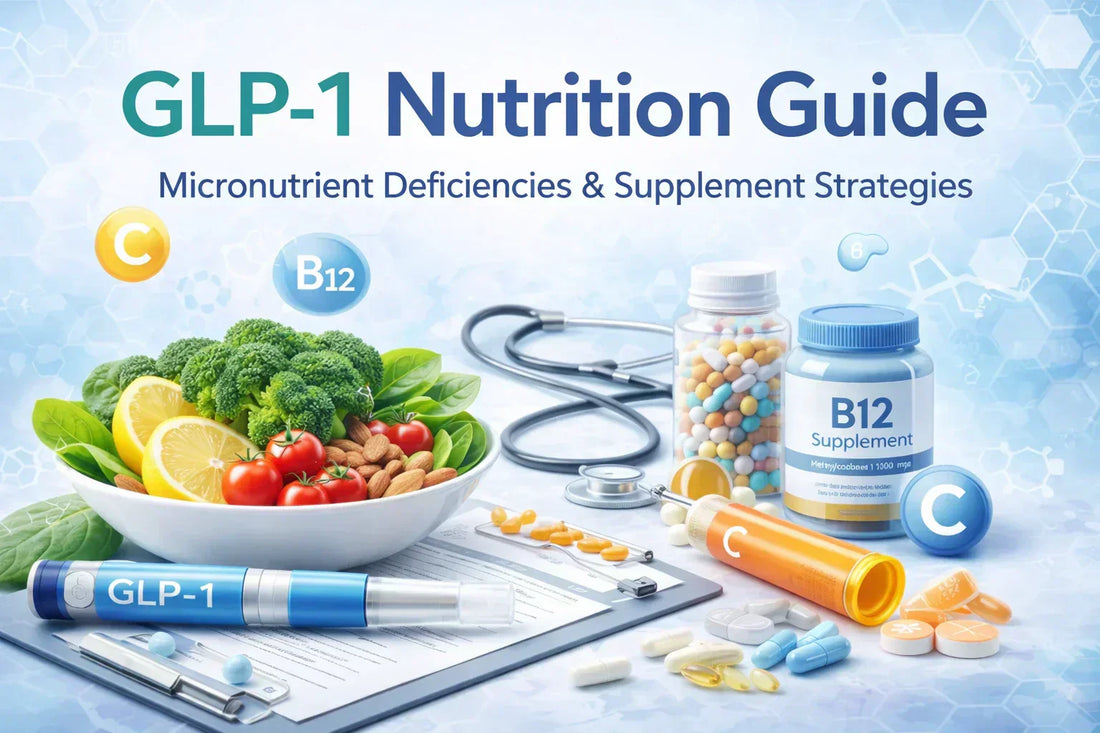
What should you eat on GLP-1 medications?
Shelby Leith, RPhT
Diabetes Educator & Performance Expert • 2026 Edition
It’s no secret that GLP-1 medications are everywhere right now. You’ve probably seen influencers or celebrities talking about them online, heard friends mention them, or are maybe noticing how many people are turning to them for a bit of extra help as we head into the 2026 summer season. The idea of feeling lighter, more confident, and more in control of your appetite is incredibly appealing, especially with beach season just around the corner. And for many people, these medications are helping them reach their goals. But here’s something that doesn’t get talked about enough…some people are eating less, but they still aren’t feeling their best. But the right nutrition on GLP-1 medications is what turns good results into lasting ones.
That’s because appetite and nutrition aren’t the same thing. GLP-1 medications can reduce how much you feel like eating, but your body still needs the same amount of nutrients in order to function properly. That means energy, protein, vitamins, and minerals all still matter, even if you don’t feel as hungry. This is where nutrition and GLP-1 become really important.
When people focus only on eating less while losing weight on GLP-1, they can sometimes run into issues like fatigue, muscle loss, or nutrient deficiencies. That’s why being intentional with what you eat matters just as much as how much you eat.
That’s exactly why the team at DoctorAdam put this guide together. We wanted to give you the most up-to-date information so that you can fully understand everything you need to know about nutrition and GLP-1 medications.
Key takeaways · Updated October 26, 2026
- GLP-1 medications reduce appetite, but your body still needs enough nutrients.
- Put protein first at every meal to protect muscle while eating less.
- Smaller, balanced meals, fiber and hydration ease side effects.
- Medical guidance helps adjust your dose and plan as your body responds.
How do GLP-1 medications work?
GLP-1 medications mimic a natural hormone that balances blood sugar and tells your body you are full, in a stronger and longer-lasting way. You feel satisfied sooner and stay full longer.
To really understand nutrition and GLP-1, it helps to first understand exactly what these medications are actually doing in your body. GLP-1 is a natural hormone that your body already produces. Its main role is to help balance your blood sugar and tell your body when it’s full after you eat. GLP-1 medications are designed to mimic that hormone, but in a stronger and longer-lasting way.
One of the easiest ways to think about it is this - GLP-1 acts like a volume dial that turns hunger down. It doesn’t shut hunger off completely, but it lowers the level of hunger intensity that you feel. That’s why many people notice that they feel full faster and stay full for longer.
These medications also slow down how quickly food leaves your stomach. This is called delayed gastric emptying. When food stays in the stomach longer, it helps you feel satisfied for a longer period of time. That’s one of the main ways that Ozempic weight loss and other GLP-1-based treatments works.
Another important effect is how these medications influence the brain. They can reduce what people often describe as “food noise,” which are those constant thoughts about food, cravings, or snacking. When that noise quiets down, it becomes easier to make healthier and more intentional food choices.
This is where GLP-1 medications and nutrition really come together. Even though your appetite is reduced, your body still needs proper nutrition in order to function well. That’s why understanding nutrition and GLP-1 is so important. The medication helps you control hunger, but your food choices are still going to be what determines how your body feels and performs throughout the day.
Why does nutrition matter on GLP-1 medications?
Eating less does not guarantee your body gets what it needs. Without enough protein, vitamins and minerals you may feel tired, weak or lose muscle, even while the scale goes down.
One of the biggest surprises that people run into with GLP-1 medications is that they’re eating less, but they don’t always feel better. That’s because eating fewer calories doesn’t automatically mean your body is getting everything that it needs to thrive. This is where nutrition and GLP-1 becomes really important.
Your body doesn’t just run on calories. It runs on nutrients. That includes things like protein, vitamins, minerals, and healthy fats. If you’re eating very little, it’s easy to miss out on the right balance of these essentials. One of the most common issues that we see is low protein intake on GLP-1. Protein plays a very essential role in preserving your muscle mass. Without enough of it, your body may start breaking down muscle instead of just losing fat.
That’s where the difference between weight loss and fat loss comes in. Losing weight can include water, muscle, and fat…losing any combination of these will cause the number on the scale to go down. But the goal is to lose fat while still keeping your muscle. Muscle helps boost your metabolism, strength, and overall energy.
Micronutrients are important too. Vitamins and minerals support everything from your body’s energy production to how well your immune system functions. If your intake drops too low, you might notice things like fatigue, brain fog, or you just may not feel quite like yourself.
What should you eat on GLP-1 medications?
Start each meal with protein, choose whole and nutrient-dense foods, eat smaller balanced portions, add fiber gradually and drink water throughout the day.
At DoctorAdam, we talk to people every day who want to know how to feel their best while on GLP-1 medications, and these are the exact strategies that we share with our patients. These are simple, easy-to-follow tips that help you feel better, stay well-nourished, and get the most out of your results.
Tip 1: prioritize protein first
The first thing we always recommend is focusing on protein. When your appetite level drops, protein is often the first thing that people unintentionally reduce. But protein intake on GLP-1 is so important because it helps preserve your muscle mass while you’re losing weight. It also helps you feel fuller for longer and encourages steady energy levels throughout the day.
Tip 2: eat smaller, more frequent meals
Large meals can feel uncomfortable when you’re on GLP-1 medications because your digestion speed is slower. That’s why we recommend eating smaller, more frequent meals. This can help reduce feelings of nausea and makes eating feel more manageable. It’s one of the most practical strategies you can implement when thinking about what to eat when you’re on GLP-1 medications.
Tip 3: start with simple, bland foods if needed
If you’re just starting out on GLP-1 medications and you’re experiencing nausea, it’s important to know that this is completely normal. In those early stages, simple foods like toast, rice, eggs, or yogurt can be a lot easier to tolerate. Choosing the right GLP-1 side effects nausea food can make a big difference in how you feel on a daily basis.
Tip 4: focus on nutrient-dense foods
Because you’re eating less, every bite matters more. That’s why we encourage whole, nutrient-dense foods that provide all of the vitamins and minerals that your body needs. A well-balanced GLP-1 weight loss diet focuses on quality over quantity, helping your body stay properly supported even with reduced intake.
Tip 5: stay hydrated
Hydration is an important factor but it’s something that people often overlook. Drinking enough water helps boost the digestion process, reduces feelings of fatigue, and can even help if you feel nauseated. When your food intake drops, hydration becomes even more important.
Tip 6: limit highly processed foods
Highly processed foods can cause your blood sugar to spike and they don’t provide lasting feelings of fullness or satisfaction. They also tend to be lower in nutrients. When you’re thinking about which foods to avoid on GLP-1, processed snacks, sugary drinks, and ultra-refined foods are usually at the very top of the list.
Tip 7: be mindful with alcohol
Alcohol can affect your body differently while you’re on GLP-1 medications. Because your digestion is slower and your tolerance levels can change, the effects of alcohol may hit harder and can last longer. It can also interfere with your body’s ability to regulate blood sugar, so moderation is really important.
Tip 8: don’t skip meals
Even if you’re not feeling hungry, skipping meals entirely can lead to low energy and missing nutrients. It’s important to still eat something small and properly balanced. When you’re thinking about what to eat on Ozempic, even light meals with some protein and healthy fats can help you keep up your energy and feel more stable throughout the day.
Tip 9: listen to your fullness signals
GLP-1 medications help your body recognize when it feels full more easily. That means it’s important to stop eating when you feel satisfied, not when you are overly full. This helps prevent feeling uncomfortable and leads to better digestion.
Tip 10: build a sustainable routine
The goal isn’t perfection, it’s consistency. Creating a routine that feels manageable for the long-term is what will lead to long-lasting results. When we look at GLP-1 medications and nutrition, the most successful outcomes come from simple habits that you can keep up over time like prioritizing good sleep and managing your stress levels.
That’s why a properly planned GLP-1 weight loss diet focuses on quality, not just quantity. Even if your appetite is lower, your body still needs the right building blocks in order to function well. Eating intentionally helps make sure that you’re supporting your health, not just reducing your food intake.
Why do you need medical support on GLP-1?
Dosing is not one-size-fits-all; it often needs adjusting based on how your body responds, and a provider helps you manage side effects and stay on track.
When it comes to nutrition and GLP-1, having the right support makes a big difference. These medications are powerful, and while they can be very effective, they also need to be used properly. That’s where medical guidance comes in.
Dosing isn’t one-size-fits-all. It often needs to be adjusted over time based on how your body responds. Some people need slower increases to manage side effects, while others may need changes to optimize results. That’s why ongoing monitoring is so important.
Nutrition is another important piece of the puzzle. It shouldn't be about eating less, the focus should be about eating the right things. A well-structured GLP-1 diet plan helps make sure you’re getting enough protein, nutrients, and energy to support your body while you’re losing weight. Without the right guidance, it’s easy to under-eat or miss out on important nutrients that your body needs.
Side effects like nausea, fatigue, or digestive changes can also come up, especially in the beginning. With proper support, these can usually be managed with simple adjustments to your food choices, the timing of the medication, and the dosage.
At DoctorAdam, we take a physician-guided approach that looks at the full picture. We help you understand how your body is responding, adjust your plan when needed, and make sure your approach to nutrition supports the results that you are looking for.
Should you eat as little as possible on GLP-1?
No. The goal is not to eat as little as possible but to eat in a way that fuels your body, which is what leads to better energy and longer-lasting results.
GLP-1 medications can be incredibly helpful, but they’re only one part of the picture. They can help you manage your appetite, but it’s the small choices that you make every day that have the biggest effects on your results. That’s why nutrition and GLP-1 go hand in hand. What you eat still matters just as much as how much you eat.
The goal should never be to eat as little as possible. The goal should be to eat in a way that supports your body, your energy, and your long-term health. When you focus on creating balanced meals, getting enough protein, and following a routine of consistent habits, you’re setting yourself up for results that will actually last.
At DoctorAdam, we’re here to help guide you through that process. We help you understand what to eat on Ozempic, how to manage its side effects, and how to build a plan that feels realistic and sustainable for the long run.
If you’re ready to feel better, stay nourished, and lose weight safely, book a consultation with DoctorAdam today. We’ll help you create a plan that works for you.
Frequently asked question
What are the nutrition considerations for GLP-1?
The main focus should be making sure that your body still gets what it needs, even if you’re eating less. That means prioritizing protein, staying hydrated, and including foods that provide essential vitamins and minerals. Your appetite may go down, but your body’s nutritional needs haven’t changed.
What supplements should I take while on GLP-1?
What supplements should I take while on GLP-1? Some people benefit from adding protein supplements, electrolytes, or B vitamins, especially if your food intake is low. It really depends on your diet and how your body is responding, so it’s best to use supplements to fill in the gaps, and not replace real food.
What foods should you avoid while taking GLP-1?
While taking GLP-1 medications, you should avoid highly processed foods, sugary snacks, and very high-fat meals because they can be harder to tolerate and may worsen nausea or digestive discomfort. These foods also tend to be low in nutrients, which makes them less helpful to your overall health when you’re eating smaller portions.
What I wish I knew before starting GLP-1?
Many people wish that they knew that their appetite level may drop quickly, sometimes faster than they actually expected. It’s easy to assume that eating less is enough, but nutrition still matters. Being intentional with your food choices early on can help prevent fatigue and nutrient deficiencies.
What is the 3-3-3 rule for weight loss?
The 3-3-3 rule for weight loss is a simple guideline that includes eating three meals per day, including three of the main food groups in each meal, and spacing your meals about three hours apart from one another. It helps create structure and keeps your energy levels more stable throughout the day.
DISCLAIMER: Medical information provided here is for educational purposes only. Always consult with a licensed healthcare provider for diagnosis and treatment.
About the writer
Shelby Leith is an experienced medical writer with deep roots in pharmacy and a real passion for helping people gain a deeper understanding of their health. With over 26 years as a Registered Pharmacy Technician and specialized training in diabetes education, she knows how to strike a balance between clinical accuracy and what actually has an impact on everyday life.
Shelby also brings firsthand insight into diet, nutrition, supplementation, and performance through her experience as a two-time amateur bodybuilding competitor.



1 Comment
I keep asking what the ingredients that make up GLP 1