How to Sleep Better: 10 Science-Backed Tips for Better Sleep

If you've spent more nights than you'd like to admit counting sheep or staring at the ceiling, you find yourself in good company. According to the CDC , roughly one in three American adults gets less than the recommended seven hours of sleep a night on a regular basis. That's a huge number of people walking around every day running on empty, and it's the reason why so many of us end up searching for answers on how to sleep better in the first place.
If you've spent more nights than you'd like to admit counting sheep or staring at the ceiling, you find yourself in good company. According to the CDC, roughly one in three American adults gets less than the recommended seven hours of sleep a night on a regular basis. That's a huge number of people walking around every day running on empty, and it's the reason why so many of us end up searching for answers on how to sleep better in the first place.
The good news is that sleep isn't some mysterious process that's totally out of your control. It's a real, biological system that has predictable rhythms, and once you understand how that system actually works, it becomes a lot easier to make small changes that lead to big results. That's exactly why the team at DoctorAdam put together this guide. We wanted to jump into the science behind sleep and make it easy to understand with these 10 science-backed sleep tips you can actually start using tonight.
Why Learning How to Sleep Better is More Important Than You Think
It's easy to think of sleep as just that mandatory downtime that always happens at the end of your day, but that's not really what's happening. While you're asleep, your brain is really busy sorting through memories and retaining information, your body is repairing damaged tissue, and your hormones are resetting for the next day. Sleep is when a lot of your body's most important maintenance work actually gets done.
When that process gets cut short night after night, the effects can really start to add up. Research from the CDC links chronic short sleep to a higher risk of obesity, type 2 diabetes, depression, and heart disease. Poor sleep and overall health are much more closely connected than most people realize, since almost every system in your body, from your metabolism to your immune system, relies on you getting enough consistent rest.
This is why figuring out how to sleep better goes far beyond just feeling less groggy the next morning. It's actually a foundational part of taking care of your long-term health, your mood, and your energy for all of the things you want to do during the day.
How Your Body Naturally Regulates Sleep
To understand how to improve sleep quality, it helps to first understand how your body decides when it's time to sleep in the first place. Your body runs on what's called a circadian rhythm, which is basically an internal 24-hour clock that tells nearly every organ in your body when to be active and when to wind down. You can think of it like a conductor leading an orchestra. It's constantly sending timing cues to your brain, your digestive system, and your hormones so that everything works together instead of falling out of sync.
Light is the single biggest signal that this internal clock uses to set itself. When your eyes take in bright light in the morning, that signals your brain to suppress a hormone called melatonin, which is the hormone that makes you feel sleepy. As the sun goes down and light exposure fades, your melatonin levels rise again, which is what starts to make you feel drowsy in the evening.
When this internal clock is thrown off, whether that's from staring at a bright phone screen late at night, working irregular hours, or simply going to bed at a different time every night, your body has a much harder time knowing when it's actually supposed to sleep.
10 Tips to Help You Sleep Better Tonight
Here are 10 tips, all backed by research, that can help you fall asleep faster, stay asleep longer, and wake up in the morning actually feeling rested.
1. Keep a Consistent Sleep Schedule
Going to bed and waking up at roughly the same time every day, even on weekends, is one of the best things you can do for better sleep at night. A consistent schedule helps to keep your circadian rhythm on track, so that your body naturally starts to feel tired around the same time each evening instead of fighting against a constantly shifting internal clock.
2. Get Sunlight Exposure Early in the Day
Spending 10 to 15 minutes outside in natural morning light helps reinforce your body's internal clock and can make it easier to fall asleep faster that same night. If you work indoors most of the day, even opening the blinds or taking a short walk outside during your morning coffee can make a big difference.
3. Watch Your Caffeine Timing
Caffeine has a half-life of roughly five to six hours, according to the Sleep Foundation, which means that a cup of coffee at 3 p.m. can still leave a noticeable amount of caffeine in your system by the time you're trying to fall asleep. Cutting off caffeine somewhere around early afternoon is one of the easiest sleep hygiene tips there is, and it can make a big difference in how smoothly you drift off.
4. Create a Cool, Dark, and Quiet Bedroom
Your bedroom environment plays a bigger role than most people give it credit for. A cooler room, somewhere in the range of 65 to 68 degrees Fahrenheit, tends to encourage deeper sleep because your core body temperature naturally drops as part of falling asleep. Blackout curtains, a white noise machine, or even an eye mask can help remove the light and sound disruptions that pull you out of deep sleep throughout the night.
5. Dim the Lights and Step Away From Screens Before Bed
The blue light from phones, tablets, and TVs can suppress melatonin production and trick your brain into thinking that it's still daytime, according to Harvard Health. Dimming the lights in your home and putting your phone away 30 to 60 minutes before bed gives your melatonin levels time to naturally rise, which makes it a lot easier to fall asleep faster once your head hits the pillow.
Still Struggling to Fall or Stay Asleep?
Complete an online sleep evaluation and let a licensed provider review your sleep patterns, symptoms, medical history, and current medications.
Explore Sleep Treatments6. Be Mindful of Alcohol Before Bed
A lot of people think of alcohol as something that helps them fall asleep, and it can make you feel drowsy at first, but it actually breaks up your sleep later in the night and reduces the amount of deep sleep you get, according to the Sleep Foundation. If you're serious about learning how to sleep better, cutting back on alcohol in the hours before bed is an easy change you can make.
7. Move Your Body During the Day
Regular exercise is one of the most well-researched natural ways to sleep better. Physical activity helps regulate your body's internal clock, reduces stress hormones, and can help you fall into deeper sleep stages more easily. Just try to finish any intense workouts a few hours before bedtime, since exercising too close to bed can leave some people feeling too energized to be able to wind down properly before their head hits the pillow.
8. Build a Wind-Down Routine
Your brain benefits from a clear signal that the day is ending. A short wind-down routine, whether that's reading, some light stretching, journaling, or a warm shower, helps to shift your body out of daytime mode and into a more relaxed state. Doing the same routine most nights also reinforces to your brain that bedtime is coming, which can help you fall asleep faster over time.
9. Pay Attention to What and When You Eat
Large or heavy meals close to bedtime can lead to discomfort and indigestion that make it harder to fall and stay asleep. On the other hand, going to bed overly hungry can also disrupt your sleep. Aiming to finish your last big meal two to three hours before bed, and reaching for a light, healthy snack if you need one, is a good habit that can lead to better sleep at night.
10. Manage Stress and Know When to Get Extra Support
Racing thoughts and a wound-up nervous system are some of the most common reasons that people struggle to fall asleep in the first place. Techniques like deep breathing, meditation, or writing down tomorrow's to-do list before bed can help quiet a busy mind. If stress, anxiety, or ongoing insomnia are getting in the way no matter what you try, that's a sign it may be time to talk to a medical provider rather than trying to push through it alone.
Stop Guessing About Your Sleep
Explore DoctorAdam sleep support and find out whether a provider-guided option may be appropriate for your needs.
Start Your Sleep EvaluationWhen to Talk to a Doctor About Your Sleep
Lifestyle changes solve a lot of sleep problems, but not all of them. If you've tried these tips consistently for a few weeks and you're still struggling to fall asleep, stay asleep, or wake up feeling rested, it's worth talking to a licensed medical provider. Ongoing sleep struggles can sometimes point to an underlying issue, like a sleep disorder, hormone imbalance, or high stress levels, that may benefit from more support.
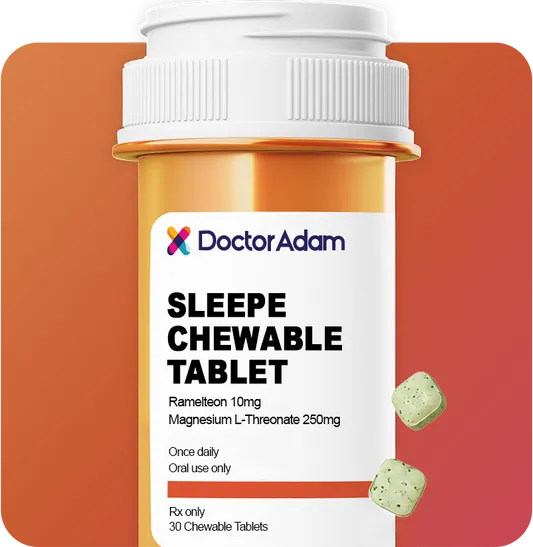
At DoctorAdam, we offer online evaluations with U.S.-based licensed providers who can help you understand what's actually getting in the way of your sleep. If it's appropriate for you, that can include prescription sleep medication like SleepE or Knockout, sent straight to your door or your preferred pharmacy, with no waiting room required.
If you're ready to stop guessing and finally get a plan that's built around your specific sleep patterns, we're here to help. Book a consultation with DoctorAdam to get started.
Frequently Asked Questions
How can I train myself to fall asleep faster?
Keeping a consistent bedtime, dimming lights in the hour before bed, and avoiding caffeine after early afternoon are some of the best ways to fall asleep faster. Building a short, relaxing wind-down routine also signals to your brain that it's time to slow down, which can make falling asleep feel a lot more automatic over time.
How many hours of sleep do adults actually need?
Most adults need at least seven hours of sleep each night, according to the CDC. Needs can vary a bit from person to person, but consistently sleeping less than seven hours is linked to a higher risk of several chronic health conditions.
What is the fastest natural way to fall asleep?
There's no single instant fix, but combining a few habits, like a cool dark room, no screens before bed, and a short breathing or relaxation exercise, tends to work best. These natural ways to sleep better work by calming your nervous system and reinforcing your body's natural circadian rhythm.
Why do I wake up in the middle of the night and can't fall back asleep?
This can happen for a lot of reasons, including stress, alcohol, an inconsistent sleep schedule, or an underlying sleep disorder. If it happens occasionally, a wind-down routine and better sleep hygiene tips can often help. If it happens regularly, it's worth talking to a medical provider to help you identify what's actually causing it.
Is it possible to improve sleep quality without medication?
Yes, for a lot of people. Consistent sleep and wake times, morning sunlight, limiting caffeine and alcohol, and creating a calm bedroom environment can make a real difference on their own. That said, some people do benefit from short-term or ongoing medical support, which is something a licensed provider can help you figure out.
Shelby Leith
Shelby Leith is an experienced medical writer with deep roots in pharmacy and a passion for helping people better understand their health. With more than 26 years of experience as a Registered Pharmacy Technician and specialized training in diabetes education, she combines clinical accuracy with practical, easy-to-understand health guidance. Shelby also brings firsthand knowledge of nutrition, supplementation, and performance through her experience as a two-time amateur bodybuilding competitor.