NAD+ vs. sermorelin: what’s the difference?
Written and reviewed by
Brandi M.As more people look for new ways to boost their energy, focus and recovery as they age, two names come up again and again in longevity circles: NAD+ and sermorelin. Both appear in many modern healthy-aging plans, but they work in completely different ways.
NAD+ is a coenzyme that powers energy production and helps repair DNA inside your cells. Sermorelin is a peptide that encourages your pituitary gland to release more of your body’s own growth hormone. In this guide to NAD+ vs. sermorelin, we compare how each works, their potential benefits, what the research shows, safety, and how to decide which one fits your goals, so you can have a more informed conversation with a licensed provider.
Key takeaways · Updated October 28, 2026
- NAD+ is a coenzyme that helps cells make energy and repair DNA; sermorelin is a peptide that signals your pituitary gland to release more of your own growth hormone.
- NAD+ is usually chosen for energy, focus and cellular support; sermorelin for recovery, body composition and sleep quality.
- Both have favorable short-term safety profiles under medical supervision, but long-term anti-aging evidence is still developing.
- They work on different systems and are often combined, with NAD+ earlier in the day and sermorelin in the evening, under a provider’s guidance.
What is the difference between NAD+ and sermorelin?
NAD+ works inside your cells, supporting energy production and DNA repair. Sermorelin works on your hormones, prompting the pituitary gland to release more of your own growth hormone. One is metabolic and the other is hormonal, so they target different goals.
| NAD+ | Sermorelin | |
|---|---|---|
| Main target | Cellular energy and DNA repair | Growth hormone axis (pituitary gland) |
| How it works | Replenishes a key coenzyme | Stimulates natural growth hormone release |
| Main focus | Energy, focus, mitochondrial support | Recovery, body composition, sleep quality |
| When effects may appear | Often days to a few weeks | Usually weeks to months |
| Forms | Tablets, nasal spray, injection, IV | Usually a small injection under the skin |
| Regulatory status | Not FDA-approved for anti-aging | Once FDA-approved for children; adult use is off-label |
What is NAD+ and how does it work?
NAD+ (nicotinamide adenine dinucleotide) is a coenzyme found in every living cell. It helps your mitochondria turn nutrients into energy (ATP), supports DNA repair and cell signaling, and activates sirtuins, proteins linked to healthy aging.
NAD+ levels tend to fall with age, and lower levels have been linked to reduced cellular energy, more oxidative stress and slower recovery. Raising NAD+ is one way to support mitochondrial health. If you’ve noticed your energy fading, our article on NAD+ and low energy after 40 explains the science in more detail.
What are the ways to take NAD+?
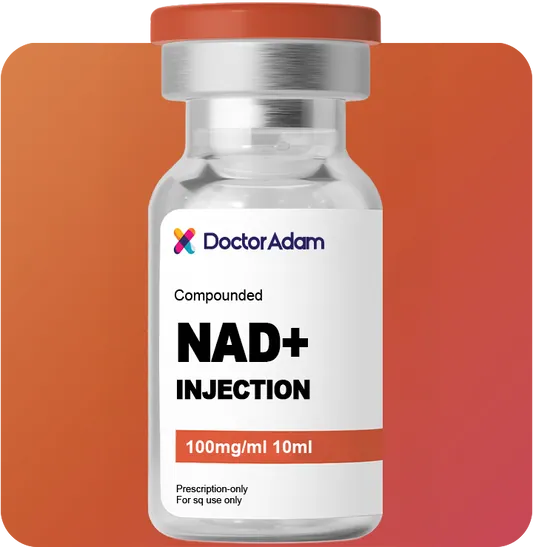
NAD+ can be supported with injections, which deliver it more directly; oral precursors such as NMN and NR, which the body converts into NAD+; and nasal sprays, a needle-free option.
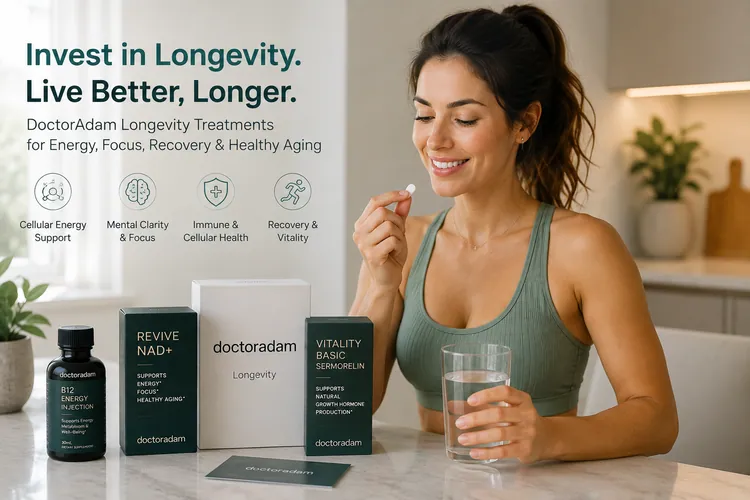
At DoctorAdam, provider-guided options include Revive NAD+ tablets, Revive NAD+ nasal spray and injectable NAD+. Human studies show that oral precursors reliably raise NAD+ levels in the blood and are usually well tolerated in the short term, while results for energy and longevity outcomes are still mixed and being studied.
What is sermorelin and how does it work?
Sermorelin is a lab-made peptide made of the first 29 amino acids of growth hormone-releasing hormone (GHRH). It binds to receptors in the pituitary gland and prompts it to release more of your own growth hormone, rather than replacing growth hormone directly.
Because sermorelin works further up the chain, your body’s natural feedback controls, such as somatostatin and IGF-1, stay in place, as described in a review in Clinical Interventions in Aging. Growth hormone production slows as we get older, and supporting it may help with body composition, tissue repair, recovery and sleep. Sermorelin was once FDA-approved (as Geref) to diagnose and treat growth hormone deficiency in children, but was later taken off the market for business reasons, not safety concerns.
DoctorAdam offers sermorelin as part of its longevity collection, including Vitality Restore Sermorelin, Vitality Basic Sermorelin and sermorelin injections.
What are the potential benefits of NAD+?
People usually choose NAD+ for more daytime energy and less fatigue, clearer thinking and less brain fog, better recovery from physical and mental stress, and support for cellular health and metabolism.
Research confirms that NAD+ precursors raise NAD+ levels in the body. Some studies show early signals for insulin sensitivity or walking capacity in specific groups, but broad anti-aging claims still need stronger, longer-term human data.
What are the potential benefits of sermorelin?
Sermorelin is most often used to help maintain lean muscle and a healthy body composition, support recovery from exercise and stress, improve sleep quality, especially deep sleep when growth hormone is naturally released, and support tissue repair and overall wellbeing.
Sleep and growth hormone are closely linked; to learn more about getting deeper, more restorative rest, see our guide on sleep quality vs. quantity.
Is NAD+ or sermorelin safe?
Both have favorable short-term safety profiles when used under medical supervision. Oral NAD+ precursors are generally well tolerated, with mild stomach upset at higher doses. Sermorelin’s most common side effects are injection-site irritation, temporary headache and flushing.
NAD+ side effects
Clinical studies of oral precursors such as NMN and NR show good tolerability for up to several months, with mild stomach discomfort the most common complaint at higher doses. Injected or IV NAD+ can briefly cause flushing, nausea, a feeling of chest pressure or other infusion-related effects in some people.
Sermorelin side effects
Sermorelin is well tolerated with proper monitoring. The most common effects are irritation at the injection site, a temporary headache and flushing; dizziness and fluid retention are less common. Because it raises growth hormone and IGF-1 levels, providers often check blood sugar as well.
Safety first: neither NAD+ nor sermorelin is FDA-approved for anti-aging. Use them only under the care of a licensed provider who knows your health history and medications.
Can you take NAD+ and sermorelin together?
Yes. They act on different systems, one cellular and one hormonal, and there is no known direct interaction between them. Many longevity programs combine NAD+ for daytime cellular energy with sermorelin for overnight repair, under a provider’s supervision.
Timing matters: NAD+ is usually taken earlier in the day, while sermorelin is typically used in the evening to match the body’s natural nighttime growth hormone pulses. Combining them should always be guided by a professional.
NAD+ or sermorelin: which is right for you?
Choose NAD+ if low energy, brain fog and cellular support are your main concerns. Choose sermorelin if body composition, muscle recovery and sleep quality matter most. Consider both, with a provider’s guidance, if you want a fuller approach to energy and recovery.
The best first step is a medical evaluation, ideally with lab work such as IGF-1, fasting insulin, inflammation markers and hormone levels, reviewed by a clinician experienced in longevity care. Lifestyle still matters most; our guide on how to live longer covers the everyday habits with the strongest evidence, and our roundup of longevity treatments for energy, focus and recovery compares other options.
Explore provider-guided longevity treatments with DoctorAdam
DoctorAdam’s longevity treatments are provider-guided, with NAD+ in tablet, nasal spray and injectable forms, plus sermorelin options. Start with a free online assessment, and a U.S.-licensed provider will help you choose what fits your goals and health history.
Visit the DoctorAdam longevity page to get started. If treatment is right for you, it’s shipped discreetly to your door, with ongoing access to your care team for questions and follow-up.
Frequently asked questions
What is the main difference between NAD+ and sermorelin?
NAD+ supports cellular energy production and DNA repair inside your cells. Sermorelin stimulates your pituitary gland to release more of your own growth hormone. One works metabolically, while the other works hormonally.
Which works faster for energy and focus?
Many people notice changes in energy and mental clarity with NAD+ within days to a few weeks. Sermorelin’s effects on recovery and body composition usually take longer, typically weeks to months.
Are NAD+ and sermorelin safe?
Both have favorable short-term safety profiles under a physician’s guidance, and side effects are usually mild. NAD+ may cause mild stomach upset or flushing, while sermorelin most often causes injection-site reactions, headache or flushing.
Can I take NAD+ and sermorelin at the same time?
Yes. They act on different pathways and are often combined in longevity programs, usually with NAD+ earlier in the day and sermorelin in the evening. Proper timing and provider oversight are important.
Is sermorelin the same as growth hormone?
No. Sermorelin isn’t growth hormone; it’s a peptide that signals your pituitary gland to make and release more of your own growth hormone, while keeping the body’s natural feedback controls in place.
How do I know which one is right for me?
Start with a medical evaluation and relevant lab tests. A licensed clinician can match the therapy, or a combination, to your goals, health history and lab results.
Sources
Brandi M.
Health Writer • Wellness & Longevity Content
Brandi M. is a health writer who turns complex medical research into clear, practical guidance you can actually use. She covers longevity, sleep, hormones and everyday wellness, with one goal in mind: helping readers walk into every conversation with their healthcare provider informed, confident and ready to make the choice that is right for them.
This article is for informational purposes only and does not replace medical advice. Prescription products require an online consultation with a licensed healthcare provider, who will determine whether treatment is appropriate for you.