How can men live longer?

Written and reviewed by
Shelby Leith, RPhTSomewhere between the protein shakes, the cold plunges and the endless list of longevity podcasts, the simple question of how to live longer has become far more complicated than it needs to be. According to the CDC, the average life expectancy for men in the United States was 76.5 years in 2024, almost five years shorter than for women. That gap isn’t just bad luck. Much of it comes down to daily habits, health conditions that go unnoticed and the fact that many men put off seeing a doctor until something feels really wrong.
The good news is that how many years you live, and how good you feel during them, is far more in your control than most people think. Some of the biggest gains come from simple, everyday changes rather than expensive gadgets or extreme routines.
That’s why the team at DoctorAdam put this guide together: to explain what longevity really means, what the science says about the habits that add years to your life, and the steps you can start taking today to live a longer, healthier and more energetic life.
Key takeaways · Updated October 26, 2026
- Genes explain only about 7% of differences in lifespan; daily habits matter far more.
- Men who follow five to eight healthy habits may live 12 to 24 years longer.
- Cardio fitness, strength training, a whole-food diet and 7–8 hours of sleep are the strongest levers.
- Regular check-ups catch silent problems early; hormone and NAD+ support can add to, not replace, the basics.
What is the difference between healthspan and lifespan?
Lifespan is the total number of years you live. Healthspan is the number of those years you spend healthy, strong and independent, free from chronic disease. The real goal of longevity is to extend both, adding life to your years, not just years to your life.
When most people think about longevity, they think about the number of candles on their birthday cake, but researchers now focus just as much on healthspan vs. lifespan. Think of it like a car: lifespan is how many miles are on the odometer when it finally stops; healthspan is how many of those miles you drove smoothly, without the check engine light on or constant trips to the shop.
For many men there is a big gap between the two, with the last decade or more spent managing heart disease, type 2 diabetes or mobility problems. Closing that gap means you can keep doing the things you love well into your 70s, 80s and beyond.
Is longevity determined by your genes?
Much less than most people think. A study of family trees covering more than 400 million people found that genetics likely account for no more than about 7% of the differences in how long people live; daily habits have a far bigger influence.
Many men assume that if their father and grandfather lived into their 90s, they will too, and if not, there isn’t much they can do. But a study by Calico Life Sciences and Ancestry found that inherited factors play a much smaller role than the 20 to 30 percent that earlier studies had estimated.
Genes still matter, and some people are dealt a better hand than others. But how you move, eat, sleep and handle stress has a much bigger influence on your longevity than your family history.
What habits help men live longer?
Eating a healthy diet, exercising regularly, keeping a healthy weight, limiting alcohol and not smoking were linked to about 12 extra years of life in men. Adding stress management, good sleep and positive relationships was linked to up to 24 extra years.
A Harvard T.H. Chan School of Public Health study followed more than 120,000 adults for up to 34 years and found that men who kept five healthy habits gained about 12 extra years. An even larger study of more than 700,000 U.S. veterans expanded the list to eight habits; men who had all eight by age 40 were predicted to live an average of 24 years longer than men who had none. People who made changes in their 50s and 60s still gained meaningful benefits. These are the longevity tips backed by the strongest research.
| Habit | What the research found | A simple target |
|---|---|---|
| Cardio fitness | Being unfit carried a death risk comparable to smoking or diabetes. | Brisk walking or cycling most days; about 7,000+ steps. |
| Strength training | 30–60 minutes a week linked to a 10–20% lower risk of death. | Two or three short sessions a week. |
| Whole-food diet | Mediterranean-style eating supports heart and blood vessel health. | Half a plate of vegetables, a quarter protein, a quarter fiber-rich carbs. |
| Sleep | Five healthy sleep habits linked to 4.7 more years for men. | 7–8 hours, falling asleep easily, waking rested. |
| Alcohol and smoking | Regular binge drinking linked to about a 20% higher risk of death. | Don’t smoke; keep alcohol to a minimum. |
1. How does cardio fitness affect longevity?
It may be one of the most important health numbers you never think about. In a Cleveland Clinic study of more than 122,000 adults, being out of shape carried a risk of death comparable to, or greater than, smoking, diabetes or heart disease.
There didn’t seem to be an upper limit: the fittest people lived the longest. You don’t need to train for a marathon, though. Brisk walking, cycling, swimming or anything that makes it a little harder to hold a conversation counts as exercise for longevity. Even your step count matters: a University of Sydney analysis of 57 studies found that about 7,000 steps a day was linked to a 47 percent lower risk of early death compared with 2,000 steps.
2. Does strength training help you live longer?
Yes. A review by researchers at Tohoku University found that just 30 to 60 minutes of muscle-strengthening activity a week was linked to a 10 to 20 percent lower risk of dying from any cause, and about 40 percent when combined with aerobic exercise.
Muscle is like a retirement account for your body: you build it now so you have something to draw on later. Men naturally lose muscle with age, and the loss speeds up each decade, which means weaker bones, poorer blood sugar control, a slower metabolism and a higher risk of falls. Push-ups, squats, resistance bands and free weights all work.
3. What is the best diet for longevity?
There is no single perfect longevity diet, but the patterns linked to longer lives share the same basics: vegetables, fruit, beans, whole grains, nuts, fish and olive oil, with few ultra-processed foods, sugary drinks or refined carbs. The Mediterranean diet is one of the best-studied examples.
A simple rule: fill half your plate with vegetables, a quarter with lean protein and a quarter with fiber-rich carbs. Protein becomes even more important with age, because it helps you hold on to the muscle you’re working to build.
4. How does sleep affect longevity?
Strongly, especially for men. In a study of more than 172,000 adults presented at the American College of Cardiology, men with five healthy sleep habits, such as 7–8 hours a night, falling asleep easily and waking rested, had a life expectancy about 4.7 years longer than men with one or none.
The research on sleep and longevity is especially clear for men. Sleep is when your body does much of its repair work, from rebuilding muscle to clearing waste from the brain (study summary). Poor sleep also lowers testosterone, as we explain in how sleep affects testosterone. If rest has been hard to come by, our guide on how to sleep better is a great place to start.
5. Why does weight matter for longevity?
Extra weight around the midsection, especially visceral fat around the organs, releases inflammatory compounds that raise blood pressure, blood sugar and cholesterol, all major drivers of heart disease, still the leading cause of death in the United States.
Losing even a small amount of weight can lower blood pressure, improve insulin sensitivity and reduce inflammation. For some men, physician-guided weight loss treatment is a helpful tool alongside healthy lifestyle changes.
6. How do smoking and alcohol affect life expectancy?
Quitting smoking is one of the most powerful things you can do for your health, and your body starts to benefit almost right away. In the Veterans Affairs study, regular binge drinking was linked to about a 20 percent higher risk of death.
Keeping alcohol to a minimum protects your heart, liver, sleep and hormone levels all at the same time.
7. Do stress and relationships affect how long you live?
Yes. Chronic stress keeps your body in “fight or flight” mode, raising cortisol, blood pressure and inflammation, while strong relationships are linked to better health in old age.
Living with constant stress is like leaving your car engine revving all day: the parts wear out faster. And the Harvard Study of Adult Development, which has followed men since the late 1930s, found that men who were most satisfied in their relationships at 50 were the healthiest at 80, a better predictor than their cholesterol levels.
How do hormones and NAD+ affect healthy aging?
Testosterone and growth hormone gradually decline from your 30s or 40s, which can mean less energy and muscle and more belly fat. At the cellular level, NAD+ helps turn food into energy and repair DNA, and research suggests levels may fall in some tissues with age.
Lower testosterone can contribute to lower energy, less muscle, more belly fat, a lower sex drive and slower recovery; our guide to low testosterone symptoms covers the signs. Growth hormone, which helps repair tissue and maintain muscle, also drops over the years.
Think of NAD+ as the spark plugs in your cells. The research on NAD+ and aging is still evolving, but a study from Amsterdam UMC found that older adults had lower NAD+ levels in their muscles than younger adults, while the most physically active older adults had levels closer to young people’s, one more sign of how powerful exercise is. Our article on NAD+ and low energy after 40 explains what the evidence does and doesn’t show.
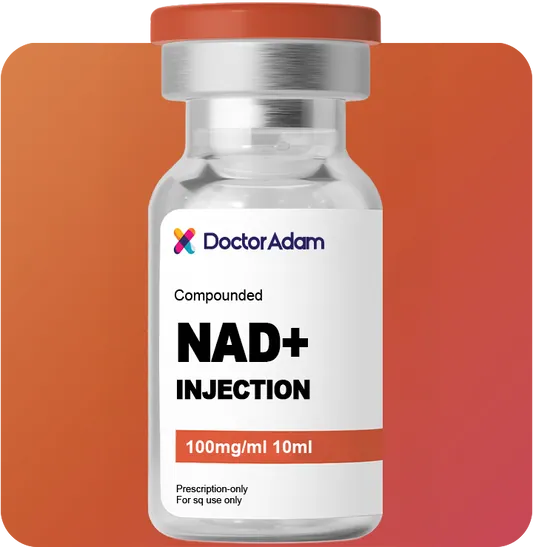
Some men choose extra support on top of healthy habits. At DoctorAdam, our providers offer options such as Revive NAD+ to support cellular energy and Sermorelin, a peptide that encourages your body to produce more of its own growth hormone, along with hormone health care. These work best as part of a complete, personalized plan rather than a shortcut, because no medication can replace moving your body, eating well and sleeping enough.
What are the early warning signs your body needs attention?
Watch for erection changes, a growing waistline, constant fatigue, poor recovery after workouts, brain fog and trouble sleeping. Many conditions that shorten men’s lives, such as heart disease, type 2 diabetes and high blood pressure, develop quietly for years before major symptoms appear.
It’s like a slow leak in a tire: easy to miss, but much easier to fix if you catch it early. Erectile changes are a good example, because the arteries that supply the penis are smaller than those that supply the heart, so problems can appear years before other signs of heart disease, as we explain in heart health and sexual performance. Our article on the signs your body may be aging faster goes into more detail.
Know your numbers: blood pressure, blood sugar, cholesterol and hormone levels give you and your provider a baseline, so problems can be caught early, when they’re much easier to treat.
The men who do best are usually the ones who take a proactive approach instead of waiting for something to go wrong. At DoctorAdam, our licensed medical team looks at your full health picture, from men’s sexual wellness to weight management and longevity support.
Is it too late to start living longer?
No. Research from the U.S. Department of Veterans Affairs found that people who adopted healthy habits in their 50s and 60s still gained meaningful years of life, so every healthy change you make today is an investment in your future self.
Longevity doesn’t come down to luck or good genes. Staying active, building muscle, eating mostly whole foods, sleeping well, keeping your weight and stress in check and staying connected to the people around you can add years, and in some cases decades, to your life. For more everyday ideas, see our guide to everyday habits that add years to your life.
If you’re wondering how to live longer and feel better while you do it, the answer usually starts with small, consistent steps and the right support. Start a confidential consultation with DoctorAdam today, and let’s create a plan made specifically for your body, your hormones and your long-term health.
Frequently asked questions
How can I live longer naturally?
Stay physically active with a mix of cardio and strength training, eat a whole-food diet, get seven to eight hours of quality sleep, keep a healthy weight, avoid smoking, limit alcohol, manage stress and stay connected to friends and family. Large studies found men who follow these habits can live 12 to 24 years longer.
What is the average life expectancy for men?
According to the CDC, the average life expectancy for American men was 76.5 years in 2024, compared with 81.4 years for women. Much of the gap comes down to factors within your control, such as heart health, smoking, alcohol use and regular medical check-ups.
What is the difference between healthspan and lifespan?
Lifespan is the total number of years you live, while healthspan is the number of years you live in good health, free from chronic disease and disability. Longevity experts now focus on extending healthspan, so you stay strong, sharp and independent for as long as possible.
Is it too late to improve my longevity after 50?
Not at all. Research from the U.S. Department of Veterans Affairs found that people who adopted healthy habits in their 50s and 60s still gained meaningful years of life. Exercising, eating better, sleeping better or quitting smoking can make a real difference at any age.
What is the best exercise for longevity?
A combination of aerobic exercise and strength training. Brisk walking, cycling or swimming improve heart and lung fitness, while strength training helps you keep muscle and a healthy metabolism; combining the two lowers the risk of early death more than either alone.
Does NAD+ help with aging?
NAD+ helps your cells produce energy and repair DNA, and some research suggests levels may be lower in certain tissues with age. Human studies are still ongoing, so NAD+ therapy is best used as one part of a complete plan with exercise, nutrition and sleep, under a licensed provider’s guidance.
Sources
- Mortality in the United States, 2024 – CDC National Center for Health Statistics
- Human genetics study shows limited influence on longevity – Calico Life Sciences
- Impact of healthy lifestyle factors on life expectancies – Circulation (Harvard T.H. Chan)
- Eight habits could lengthen your life by decades – U.S. Department of Veterans Affairs study
- Cardiorespiratory fitness and long-term mortality – Cleveland Clinic (JAMA Network Open)
- Daily steps and health outcomes – University of Sydney
- Muscle-strengthening activity and mortality – Tohoku University review
- Healthy sleep habits and life expectancy – American College of Cardiology study
- Harvard Study of Adult Development – relationships and healthy aging
- Muscle NAD+ levels, aging and physical activity – Amsterdam UMC
Shelby Leith, RPhT
Medical Writer • Registered Pharmacy Technician • Diabetes Education Specialist
Shelby Leith is an experienced medical writer with deep roots in pharmacy and a real passion for helping people gain a deeper understanding of their health. With over 26 years as a Registered Pharmacy Technician and specialized training in diabetes education, she knows how to strike a balance between clinical accuracy and what actually has an impact on everyday life. Shelby also brings firsthand insight into diet, nutrition, supplementation, and performance through her experience as a two-time amateur bodybuilding competitor.
This article is for informational purposes only and does not replace medical advice. Prescription products require an online consultation with a licensed healthcare provider, who will determine whether treatment is appropriate for you.