Your Nutrition Support for Minoxidil & Finasteride

Written by
Brenda Peralta, RDN, CDEEach time you shower, you see more and more of your hair going down the drain. And let’s not talk about what happens after you brush it.
Minoxidil and finasteride are two of the most popular options to help with hair loss. Finasteride works by lowering DHT, the hormone most closely associated with male pattern hair loss, helping protect your existing follicles and slow further shedding. Minoxidil helps improve blood flow around the follicles and supports the natural hair growth cycle. Together, they target hair loss from 2 different angles.
But medication alone won’t have the same effect. Hair follicles are metabolically demanding structures, and they rely on a steady supply of nutrients to function properly. So if your nutrition lacks the essential building blocks your hair needs, you could be working against the treatment you are paying for.
Here, we’ll review how diet and hair health connect, the specific nutrients that matter most, and how to build eating habits that complement your treatment routine.
Key takeaways · Updated November 13, 2026
- Hair follicles rely on many nutrients. A nutrient-poor diet can affect your treatment results.
- Specific nutrients, including protein, iron, zinc, B vitamins, omega-3, and vitamin D, all play a direct role in supporting healthy hair follicle function.
- Think of nutrition as the foundation for your treatment plan. It doesn’t replace medication, but it helps your body respond more effectively.
- Consistency matters. Minoxidil and finasteride require months of steady use, along with steady nutritional support.
How does nutrition affect hair growth?
Nutrition affects hair growth because hair follicles are among the fastest-dividing cells in your body. When protein, iron, zinc or other key nutrients run low, your body prioritizes essential organs over hair, and more follicles can slip out of the growth phase.
Hair doesn’t grow continuously. Each strand cycles through 3 phases:
- Anagen (active growth)
- Catagen (transition)
- Telogen (resting, before shedding)
At any given time, most of your hair follicles are in the anagen phase, but this cycle is sensitive to changes, including nutritional ones. When your body doesn’t get enough protein, iron, zinc, or other key nutrients, it prioritizes essential functions over hair growth.
Scalp health and blood flow also play a supporting role. Follicles need good circulation to receive oxygen and nutrients, which is part of why minoxidil (a vasodilator) can be effective. A diet that supports healthy blood vessels and circulation works along with the medication, rather than against it. Your genes still set the stage, as we explain in is hair loss genetic?
Which nutrients are essential for hair growth?
The nutrients most linked to healthy hair are protein, iron, zinc, biotin and other B vitamins, omega-3 fatty acids, and vitamin D. Each supports a different part of the follicle’s work, from building keratin to delivering oxygen and keeping the scalp healthy.
- Protein: Hair is made of keratin, a structural protein. Without enough protein, your body doesn’t have the raw materials to build strong hair, and low protein intake is a well-established contributor to hair thinning.
- Iron: It plays a role in delivering oxygen to hair follicles. Low ferritin (the body’s iron storage marker) has been linked to increased shedding, especially in women. If you suspect an iron deficiency, talk with your healthcare provider about bloodwork.
- Zinc: Zinc supports hormone regulation and follicle health. Along with B vitamins, vitamin D and iron, it plays a crucial role in hair growth and maintenance.
- Biotin and B vitamins: They support cellular energy production, which matters for the rapidly dividing cells in hair follicles. Few studies show improvement with biotin supplementation in people with normal levels, but results appear positive when there is a deficiency.
- Omega-3 fatty acids: Omega-3s have anti-inflammatory properties that may help support a healthier scalp environment. Chronic inflammation around the follicles can interfere with normal cycling, so reducing it may be beneficial long-term.
- Vitamin D: Vitamin D has a role in hair follicle cycling. However, supplementation appears most useful when correcting an actual deficiency, and very high doses may contribute to hair loss rather than prevent it.
What should you eat while taking minoxidil and finasteride?
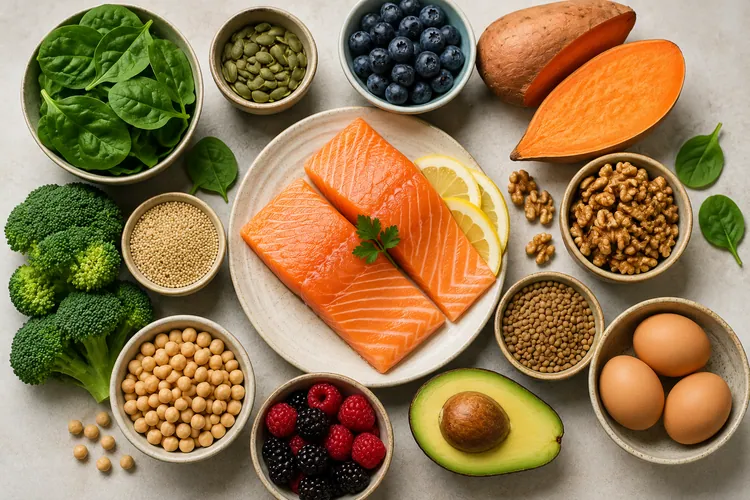
A hair-supportive plate includes lean proteins (eggs, poultry, fish, low-fat cheese), iron-rich foods (lentils, spinach, lean red meat), zinc sources (pumpkin seeds, shellfish), and healthy fats (salmon, mackerel, flax and chia seeds). There is no special diet for these medications; the goal is steady, nutrient-dense eating.
| Nutrient | Why your hair needs it | Good food sources |
|---|---|---|
| Protein | Raw material for keratin, the protein hair is made of | Eggs, poultry, fish, Greek yogurt, low-fat cheese, lentils |
| Iron | Carries oxygen to the follicles; low ferritin is linked to shedding | Lean red meat, lentils, spinach, beans, fortified cereals |
| Zinc | Supports follicle repair and hormone regulation | Pumpkin seeds, shellfish, beef, chickpeas |
| Biotin & B vitamins | Fuel energy production in fast-dividing follicle cells | Eggs, salmon, legumes, whole grains |
| Omega-3 | Anti-inflammatory support for a healthier scalp | Salmon, mackerel, sardines, flax, chia, walnuts |
| Vitamin D | Involved in the hair growth cycle | Fatty fish, egg yolks, fortified dairy and plant milks |
For more ideas, see our dietitian-reviewed list of 7 foods for hair growth and our everyday nutrition guide.
How can you optimize your nutrition while on minoxidil and finasteride?
Pair your medication with consistent, protein-rich meals, avoid crash diets, and check for real deficiencies with bloodwork before adding supplements. Nutrition and medication both take months to show results, so consistency matters more than perfection.
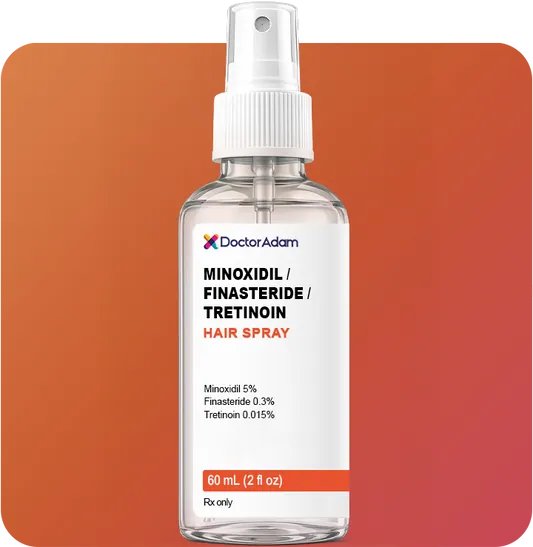
Follicle Fuel 1 is DoctorAdam’s prescription once-daily tablet that combines finasteride 1mg and oral minoxidil 2.5mg with biotin, vitamin D3 and vitamin K2. It’s designed to lower DHT and support follicle growth to help slow hair loss while protecting your existing hair. Keep in mind that it’s a medication, not a nutritional supplement or a substitute for food, which is why it’s important to pair it with nutrient-dense meals. If you prefer a single ingredient, we also offer finasteride 1mg, oral minoxidil 2.5mg, and a topical minoxidil and finasteride spray.
Both the medication and nutrition strategies take time, so consistency matters a lot. You might not notice changes right away; most people need several months of steady use before they see a difference.
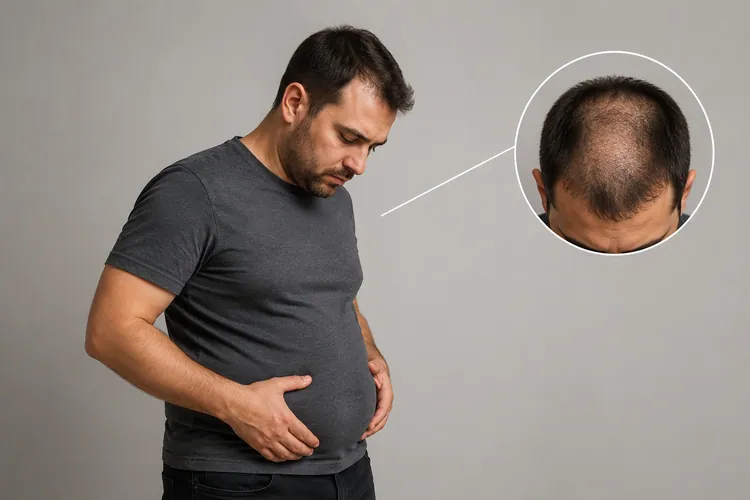
Also avoid crash dieting, restrictive eating patterns, and diets low in protein or iron. If you’ve been cutting calories aggressively or following a restrictive eating plan, it’s worth reviewing your nutrient intake. Weight and metabolism can affect your hair too, as we cover in can belly fat cause hair loss?
Thinking about a supplement? Talk with your healthcare provider first and consider baseline bloodwork (for example ferritin, vitamin D, zinc and vitamin B12), so you address the deficiencies you actually have rather than guessing.
How do you build a sustainable nutrition plan for hair loss?
Build a simple routine you can keep for 6 to 12 months: a rotation of nutrient-dense staples, protein at every meal, smart snacks, and regular progress photos. The goal isn’t a “perfect” diet; it’s consistency.
Building sustainable eating habits
Aim for a pattern you can realistically keep for the next 6–12 months, since it can take several weeks (and even months) to start noticing changes. Crash diets or short-term fixes increase your risk of nutrient deficiencies and won’t give your body what it needs to grow a healthy head of hair.
Practical meal planning
If you’re short on time, batch cook several hair-friendly staples for the week: hard-boiled eggs, baked salmon fillets, cooked lentils, and sautéed spinach.
Pay attention to your snacks too. Greek yogurt parfaits or fortified dairy products help you get enough protein, calcium and vitamin D (if fortified). The goal is a rotation of simple, nutrient-dense foods you’ll actually eat regularly, not a complicated meal plan you’ll abandon after 2 weeks.
Tracking progress and adjusting
Take a baseline photo before you start. Since changes in hair density take time, it’s common to get discouraged. Revisit that photo every few months alongside notes on your diet and any bloodwork results.
If you’re not seeing the progress you’d expect after a full year of consistent treatment and nutrition, talk with your healthcare provider. They might recommend additional testing or adjust your nutrition and medication, in line with dermatology guidance on hair loss treatment.
Nutrition: the missing piece in your hair loss treatment
Minoxidil and finasteride are two of the most effective tools for treating androgenetic alopecia, and they work best alongside proper nutrition. No diet has been shown to boost the medication itself, but a well-balanced diet gives your body the nutrients it needs to support healthy hair.
If you’re ready to combine medication with a more holistic approach to hair health, talk with our doctors to see if Follicle Fuel 1 is the right approach for you, or explore all of our hair loss treatments.
Frequently asked questions
Can diet alone replace minoxidil or finasteride for hair loss?
No. Nutrition can support your treatment, but it doesn’t replace it. The same applies the other way around: you can be taking the medication, but without proper nutrition you might not get the results you want.
Which nutrients matter most when taking minoxidil or finasteride?
The most important nutrients to focus on are protein, iron, zinc, B vitamins (including biotin), omega-3 fatty acids, and vitamin D. Together they give your hair follicles the building blocks and energy they need to grow.
Should I take a supplement while using minoxidil or finasteride?
Supplements can help, but mainly if you have a confirmed nutrient deficiency. Before adding one, ask your provider for the right bloodwork. Adding supplements without baseline bloodwork increases the risk of getting too much of certain vitamins and minerals, which can be counterproductive for your health.
What foods are good for hair growth on finasteride?
Focus on protein (eggs, poultry, fish, Greek yogurt), iron (lentils, spinach, lean red meat), zinc (pumpkin seeds, shellfish), and healthy fats (salmon, mackerel, flax and chia seeds). There is no special diet for finasteride; a balanced, nutrient-dense diet supports the follicles the medication is protecting.
Does biotin help minoxidil or finasteride work better?
Biotin mainly helps when you are actually low in it. Studies show little benefit from biotin supplements in people with normal levels, so it’s not a booster for minoxidil or finasteride. High-dose biotin can also interfere with some lab tests, so tell your provider if you take it.
Can low iron or vitamin D cause hair loss?
Low iron stores (ferritin) and low vitamin D are both linked to increased shedding, especially in women. A blood test is the only way to know your levels, and correcting a real deficiency can help your hair respond better to treatment.
Can crash dieting make hair loss worse?
Yes. Rapid weight loss, very low-calorie diets and low-protein eating can push more hairs into the resting phase, causing extra shedding a few months later. Aim for steady, protein-rich eating while you’re on treatment.
How long does it take to see results from minoxidil and finasteride?
Most people need 3 to 6 months of consistent daily use to notice less shedding, and up to 12 months to judge new growth. Good nutrition doesn’t speed this up, but it helps make sure a nutrient gap isn’t holding your results back.
Sources
- The role of vitamins and minerals in hair loss: a review – Dermatology and Therapy (PubMed Central)
- Dietary protein deficit and hair disorders – Indian Dermatology Online Journal (PubMed Central)
- Effectiveness of biotin supplementation for hair growth in patients with alopecia: a systematic review – Dermato (MDPI)
- Effect of a nutritional supplement (omega-3, omega-6 and antioxidants) on hair loss in women – Journal of Cosmetic Dermatology (PubMed)
- Role of vitamin D in hair loss: a short review – Journal of Cosmetic Dermatology (PubMed)
- Iron fact sheet for consumers – NIH Office of Dietary Supplements
- Zinc fact sheet for consumers – NIH Office of Dietary Supplements
- Hair loss: diagnosis and treatment – American Academy of Dermatology
Brenda Peralta
Registered Dietitian Nutritionist (RDN) & Certified Diabetes Educator (CDE)
Brenda Peralta is a Registered Dietitian Nutritionist and Certified Diabetes Educator with experience translating nutrition and metabolic health science into practical, easy-to-understand guidance. Her work focuses on helping readers understand how nutrition, lifestyle, metabolic health, and healthy aging strategies can support long-term wellness and quality of life.
This article is for informational purposes only and does not replace medical advice. Prescription products require an online consultation with a licensed healthcare provider, who will determine whether treatment is appropriate for you.