Is hair loss genetic?
Finding more hairs than usual in your hairbrush can feel unsettling or perhaps, even concerning. Known to many, it is incredibly common to experience changes in your hair thickness.
Finding more hairs than usual in your hairbrush can feel unsettling or perhaps, even concerning. Known to many, it is incredibly common to experience changes in your hair thickness. And, this can happen to people of all ages, backgrounds, and even genders. But despite how normal it is, the emotional impact of hair loss can run deep. Many people experience a silent concern about their appearance, a sudden loss of daily confidence, or even a persistent fear that the thinning will simply continue without stopping. In fact, a study states that premature hair loss can occur in about 96% to some degree but the gene variability in the expression of genes result to a fewer number of people experiencing premature hair loss.
So, if you are feeling this way, take comfort that your feelings are entirely valid and very common. Although genetics play an important role in how your hair changes over time, they are only that one piece of a much bigger puzzle. You are not defined by your genetic code (instilled within you), nor is your hair’s future set in stone. In this article, we will look into how genes influence your hair, clear up some common myths about inherited thinning, explore other factors that play a role, and discuss what’s realistic, helpful in treatment, and what options look like today.
Doctor Adam offers a customized approach when it comes to discussions like this. If you can relate to the majority’s concern on thinning hair, it is recommended that you talk to a professional.
Key takeaways · Updated October 26, 2026
- Genes influence hair loss tendencies but do not fully control them.
- Genetic thinning follows patterns: a receding M-shaped hairline and crown thinning in men, a widening part in women.
- DHT, stress, nutrition, illness and medications also affect hair.
- Treatments such as minoxidil work best started early; results take months.
How does hair grow?
Each hair follows a repeating cycle of growth (anagen), transition (catagen) and resting/shedding (telogen); hair loss happens when this cycle shortens or more follicles rest.
To understand why hair thins, it helps to look first at how it grows when everything is working normally. Your scalp is home to thousands of tiny pockets called follicles, each operating on its own clock.
How does hair normally grow?
Every single hair on your head goes through a repetitive cycle made up of three main phases:
The Growing Phase:
This is known as the anagen phase, which is the active time when hair grows longer. This phase typically lasts anywhere from 2–6 years.
The Resting Phase:
This is known as the catagen and telogen phases, which is a transitional time when the hair stops growing and rests quietly in its follicle for a few months.
The Shedding Phase:
At the end of the rest period, the old hair falls out to make room for a brand new strand to begin growing on the exact same spot where the hair fell.
Because of this constant cycle, losing about 50–100 hairs per day is completely normal. It is simply your body’s way of making room for fresh, healthy growth.
When does hair thinning becomes noticeable
Because hair sheds naturally every day, gradual thinning can be quite difficult to recognize at first. It is rarely a sudden event where you wake up with half your hair is gone. Instead, you might slowly notice early signs such as noticing considerably more strands in the shower drain, seeing a widening part line when you style your hair, noticing less volume when you pull it back, or seeing more of your scalp when your hair is wet. For some, a slowly receding hairline is the first subtle clue.
Is hair loss genetic?
Partly. Genes influence your tendency toward hair loss but do not guarantee it; having hair-loss genes does not mean you will definitely go bald.
When people talk about inherited hair thinning, they often employ terms that sound permanent and unavoidable. But genetic hair changes are more about tendencies than absolute rules.
Your genes influence your hair
But do not fully control it. That’s an important point to make.
Having genes linked to hair loss does not mean you are guaranteed to experience severe thinning. Your genetic makeup increases the likelihood that your hair follicles will be sensitive to certain changes, but it does not dictate exactly how or when that will play out. Furthermore, there is no single "hair loss gene." Instead, multiple genes from both sides of your family work together to influence your hair's characteristics.
It can come from either side of the family
You may have heard the old myth that hair thinning is only inherited from your mother's father. This is not true. The genetic traits that influence your hair can be passed down from your mother, your father, or a combination of both. Looking at the hair patterns of all your relatives can give you a general idea of what traits run in your family, but it still cannot give you a perfect prediction.
Why family members can have different experiences
It is very common for siblings to have completely different hair experiences. One brother might notice thinning in his twenties, while another keeps a full head of hair well into his fifties. This happens because each person inherits a unique mix of genetic traits. On top of that, individual differences in age, hormone levels, daily stress, nutrition, and overall physical health all shape how those genes show up in real life.
What does genetic hair loss look like?
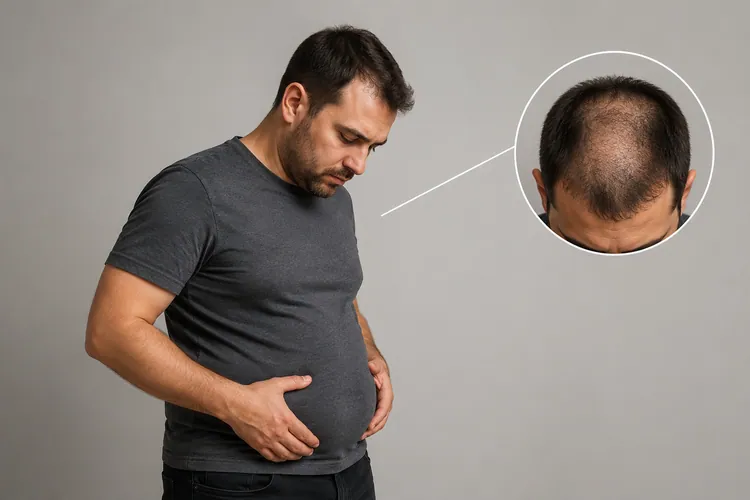
In men, it usually starts with a receding M-shaped hairline and thinning at the crown; in women, it often appears as a widening part and overall thinning on top.
The way inherited thinning progresses usually depends on your biological sex, as hormones guide the patterns in different ways.
For men, the genetic pattern is often referred to as male pattern baldness.
Common signs
- A receding hairline that slowly forms an "M" shape at the front of the head.
- Thinning at the crown, which is the circular area at the back of the scalp.
- A very gradual progression that takes place over years or even decades.
What the pattern often looks like
Men typically lose hair in a sequence that’s predictable, which, according to a study in the Journal of Cutaneous and Aesthetic Surgery, is classified further into different types or categories. It often starts at the temples or the crown, and gradually, these two thinning areas may expand to meet each other. However, the pace or speed of this change varies greatly from one case to another. Some men experience mild thinning that stops progressing early. But there are others who see a more continuous shift.
For women, the genetic pattern looks quite different and is often called female pattern hair loss.
Common signs
- A gradual thinning that occurs across the top and crown of the scalp.
- A widening part line that makes the scalp more visible.
- A noticeable reduction in the thickness of a ponytail.
Why hairlines usually stay intact?
Unlike the male pattern, women rarely experience a completely receding hairline or total baldness. The front hairline almost always remains intact, while the thinning occurs evenly behind it. Thus, it creates a diffuse pattern across the top of the head.
Can it start young?
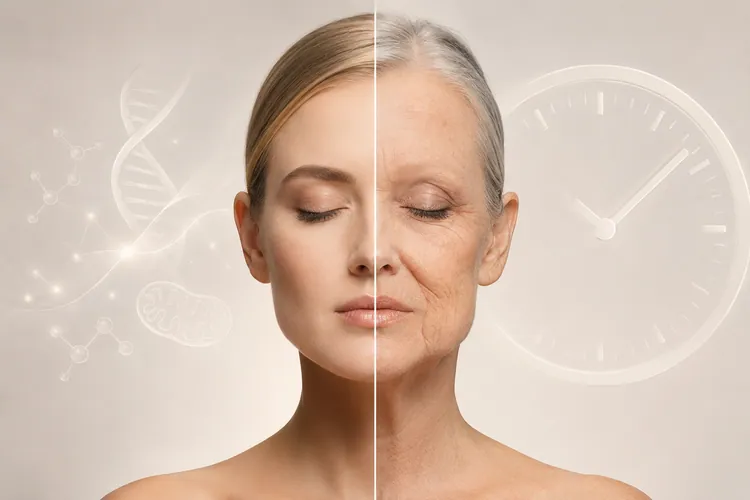
In short, yes it can. But while many people associate thinning with older age, some individuals begin to see subtle changes in their late teens or early 20s. Others may not notice any difference until they are well into their mid-lives or even later. Whenever it begins, however, starting to notice these changes early can feel overwhelming. But, it also gives you more time to explore your options or seek medical opinion, which Doctor Adam is supporting for.
What causes hair loss besides genetics?
Hormones play a major role, especially DHT, which shrinks sensitive follicles, along with age, overall health and lifestyle.
It is easy to blame genes for almost, if not all, everything. But, several other factors inside and outside your body have a significant role in how healthy your hair remains.
With that said, hormones also matter. Hormones act as the messengers that can tell your hair follicles how to behave. A hormone called DHT (dihydrotestosterone) is the primary driver of genetic thinning, as it can cause hair follicles to shrink over time. It is a given fact that significant hormonal shifts can happen, such as those that happen during menopause, after pregnancy, or when thyroid levels fluctuate. All of these are factors that can change how sensitive your hair can be, which will sometimes cause temporary or, perhaps, long-term shedding.
Can stress cause hair loss?
Yes. Stress, poor nutrition, illness and certain medications can trigger temporary shedding that makes thinning more noticeable.
Aside from genes and hormones, other factors that happen on a daily basis can trigger periods of temporary hair shedding, such as stress, nutrition, illness, and certain medications (e.g., blood pressure medications, medications for heart health, etc)
But what does genetics not tell us? It is important to understand that your genes are not a one-size-fits-all explanation for everything that happens to your and your hair. So what does it not say? Genetics cannot say the exact time when hair loss begins. It also cannot say how severe the experience will be for you. And, most especially, it cannot say whether the treatment will or will not work.
How do you know if hair loss is not genetic?
Sudden shedding, patchy loss, scalp pain or redness, or hair loss with other symptoms can point to another medical cause; a provider evaluation is the only way to know.
Possibly but without evaluation, everything is just presumption. There are times when hair shedding is just a sign of an underlying medical issue rather than a simple argument of genetics. Noticing these differences may help you seek the right kind of care.
What signs mean another condition may be responsible?
If you notice any of the following symptoms, your hair changes may be due to something other than plain genetics:
- The hair loss is sudden.
- The pattern is patchy.
- There are scalp symptoms like severe or persistent itching, pain, burning, redness, or even scaling that’s visible.
- Other physical changes (e.g., weight changes, unexplained persistent fatigue, irregularities in menstrual cycle, or you recently took a new medication)
These different types of hair issues will require entirely different approaches. For example, thinning caused by an iron deficiency or thyroid issues are treated by correcting the medical issue underneath the symptom. An early evaluation with a medical provider can help you identify the true nature of the condition and start a plan that will actually work.
What treatments work for genetic hair loss?
First-line options include topical minoxidil and oral medications prescribed by a provider; procedures such as PRP or transplants suit selected patients.
If you decide that you want to address the hair thinning issue, there are several approaches you can go for, which starts with medications. These are often the first-line of options for genetic thinning. There are topical treatments applied to the scalp, such as minoxidil.
There could also be procedures that are appropriate for selected patients only, like platelet-rich plasma, hair transplant surgery, and low-level light therapy.
Nonetheless, there are also lifestyle habits you can go for to support healthy hair, including gentle hair care, managing your stress, balanced diet and nutrition, and importantly sun protection.
How long do hair loss treatments take to work?
Hair grows slowly, so visible results usually take several months, vary by person and often focus on keeping the hair you have.
Managing your expectations is one of the most important parts of any hair care experience. You only have to remember three things, namely, hair growth requires time, the improvement through treatment is different for each case (your experience may be different from someone else’s), and treatment is often centered on maintaining the existing hair you have.
That said, it is completely normal to have mixed feelings. It is fine to feel frustrated, sad, or even a bit embarrassed about hair changes. But, be gentle with yourself. These feelings, while common, are understandable and are shared by millions of cases around the world.
Frequently asked questions
If my parent has hair loss, will I definitely lose my hair?
No, you will not definitely lose your hair just because a parent has. Genes from both sides of your family combine to determine your traits, meaning your experience can be entirely different from your parents'.
Can genetic hair loss be prevented?
While you cannot change your underlying genetics, you can often slow down or delay the thinning process greatly. Starting early treatments and maintaining healthy lifestyle habits are the most effective ways to protect your existing hair.
Does wearing hats cause hair loss?
No, wearing hats does not cause hair loss. Unless a hat is extremely tight and constantly pulling on the hair roots, it will not harm your hair follicles or cause thinning.
Can frequent shampooing make hair fall out?
No, washing your hair frequently does not cause it to fall out. The strands you see in the drain during a wash are hairs that had already entered the shedding phase and were ready to fall out naturally.

Medically reviewed by Jaclyn P. Leyson-Azuela, RMT, MD, MPH
Jaclyn P. Leyson-Azuela, RMT, MD, MPH, is a physician, medical writer, and researcher with a strong background in public health, clinical medicine, and academic instruction. She has served as an Assistant Professor teaching core medical sciences, a Doctor-to-the-Barrio delivering frontline care in underserved communities, and a COVID-19 facility manager during the pandemic.