How does propranolol help performance anxiety?

Written and reviewed by
Brandi M.Performance anxiety, often called stage fright, can turn your most important moments into a physical struggle. A racing heart, trembling hands, a shaky voice, sweating and a dry mouth can get in the way of public speaking, music performances, exams, job interviews and presentations. For many people, these physical symptoms are the biggest barrier to performing at their best.
Propranolol, a beta blocker often called an adrenaline blocker, is commonly prescribed off-label to calm these physical reactions. It doesn’t erase anxious thoughts, but it can quiet the chain reaction that adrenaline sets off. Here’s how propranolol for performance anxiety works, what the evidence shows, its benefits and limits, and the safety points to discuss with a licensed provider.
Key takeaways · Updated October 28, 2026
- Propranolol is a beta blocker that blocks adrenaline’s effects, easing a racing heart, shaking hands, a shaky voice and sweating.
- Classic studies in musicians found a single dose before a performance reduced heart rate, tremor and nervousness and improved performance ratings.
- It calms the body, not anxious thoughts, and is meant for specific events, not daily use for chronic anxiety.
- It isn’t addictive, but it isn’t safe for everyone, including people with asthma or a very slow heart rate, so a provider review is essential.
What is performance anxiety?
Performance anxiety is a situational form of anxiety that appears in specific, high-pressure moments when you expect to be watched or judged. Unlike generalized anxiety disorder, it’s tied to particular events, and it triggers the body’s fight-or-flight response.
Common triggers include:
- Public speaking and presentations
- Music and theater performances
- Important exams and job interviews
- Sporting events and high-stakes work tasks
In these moments, a surge of adrenaline and noradrenaline raises your heart rate and blood pressure and causes trembling and sweating. Our guide to how beta blockers work for anxiety explains this fight-or-flight response in more detail.
How does propranolol work for performance anxiety?
Propranolol blocks beta receptors in the heart, blood vessels and other organs, so adrenaline can’t act on them as strongly. This slows your heart rate, softens each heartbeat, reduces trembling and tones down other physical signs of stress.
Propranolol is a non-selective beta blocker. It was originally developed and approved for conditions such as high blood pressure, angina, certain heart rhythm problems, migraine prevention and essential tremor. Using it for performance anxiety is off-label, but it’s a well-established practice for specific situations, according to the NHS.
Does propranolol really work for stage fright?
For situational anxiety, the evidence is encouraging. Classic studies in musicians found that a single dose taken before a performance reduced heart rate, tremor and self-reported nervousness, and improved performance ratings from expert judges. Similar effects have been seen in public speakers and students facing exams.
Research on propranolol for performance anxiety goes back several decades and focuses on situational rather than long-term anxiety, including classic studies in musicians. For other anxiety disorders, such as generalized anxiety or panic disorder, the evidence is weaker; a systematic review in the Journal of Psychopharmacology found little support for routine use there. In those cases, therapy such as cognitive behavioral therapy and other medications remain the foundation of care.
What are the benefits of propranolol for performance anxiety?
When used correctly under medical supervision, propranolol can reduce a pounding heart and trembling, steady your voice, reduce sweating and flushing, and help you focus on the task instead of your body, without the drowsiness or mental dulling of sedatives.
- Less heart pounding and trembling
- A steadier voice and less dry mouth
- Less sweating and flushing
- Better focus on what you’re doing, not on how your body feels
- No drowsiness or mental fog at usual doses
- Not addictive and not a controlled substance
Many people also find that fewer physical symptoms help them feel more in control, which can create a positive cycle: less shaking leads to more confidence and less dread before the next big moment.
How long does propranolol take to work?
Propranolol usually starts working within 30 to 60 minutes and its effects last for several hours, so it’s taken ahead of the event rather than at the last minute.
In clinical practice, a typical dose for performance anxiety is 10 to 40 mg of immediate-release propranolol, taken about 30 to 60 minutes before the event. Providers often recommend a trial dose on a low-stakes day first, so you know how your body responds before it really counts. Your provider will decide the right dose for you.
What are the side effects and risks of propranolol?
Common side effects include tiredness, dizziness, cold hands and feet and mild stomach upset. Because propranolol lowers heart rate and blood pressure, some people feel lightheaded. It isn’t suitable for people with asthma, a very slow heart rate or certain heart conditions.
Important reasons to avoid propranolol, or use it only with extra caution, include:
- Asthma or other reactive airway disease
- A slow heart rate or heart conduction problems
- Severe peripheral vascular disease or heart failure
- Diabetes, because propranolol can hide signs of low blood sugar
- Other medications that affect heart rate or blood pressure
Propranolol isn’t meant to be taken daily for chronic anxiety; for performance anxiety, it’s used as needed for specific events. To learn how to handle tiredness, dizziness or sleep changes, read our guide to beta blocker side effects and what helps.
Get help right away if you have wheezing or trouble breathing, a very slow heartbeat, or you faint after taking propranolol.
Is propranolol enough to beat performance anxiety?
Usually not on its own. Propranolol works best as part of a broader plan that includes preparation and rehearsal, breathing and grounding techniques, reframing anxious thoughts and, for some people, therapy or skills training.
Propranolol can act as a bridge: by easing the physical symptoms, it makes it easier to practice and face stressful situations, which builds real skill and confidence. Many people find they rely on it less as their confidence grows. If nerves before big moments also keep you up at night, our guide to the common causes of poor sleep can help.
Get provider-guided propranolol online with DoctorAdam
DoctorAdam’s Calm adrenaline blocker program starts with a short online assessment of your symptoms, medical history and goals. A U.S.-licensed physician reviews your information and decides whether treatment is right for you.
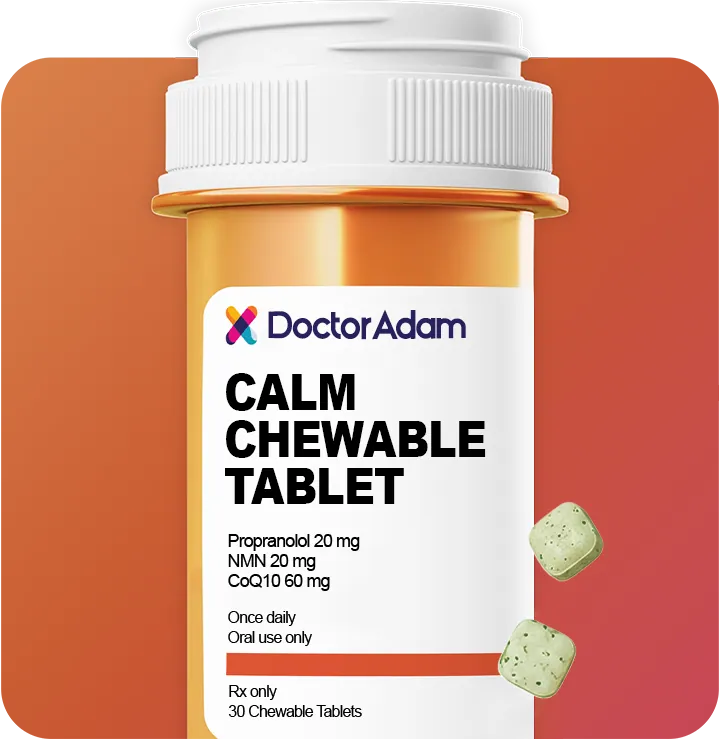
If it is, Calm chews, which pair prescription propranolol 20 mg with NMN and CoQ10, are shipped discreetly to your door. This telehealth model gives you convenient access while keeping the medical oversight that beta blockers require. Start your adrenaline blocker assessment today.
Frequently asked questions
Does propranolol treat the psychological side of anxiety?
No. Propranolol mainly relieves the physical symptoms caused by adrenaline, such as a racing heartbeat, shaking and sweating. It doesn’t directly change anxious thoughts.
How long does propranolol take to work, and how long does it last?
Its effects usually start within 30 to 60 minutes and last for several hours, which is why it’s taken ahead of the event.
Is propranolol addictive?
No. Propranolol is not a controlled substance and doesn’t carry the dependence risk of benzodiazepines.
Who should not take propranolol?
People with asthma, certain heart rhythm problems, a very low heart rate or blood pressure, and some other conditions may not be able to take it. A licensed provider needs to review your health history first.
Can I take propranolol for any stressful situation?
It’s intended for specific situations such as performances, presentations and interviews, not for everyday stress. Using it often without building skills or treating ongoing anxiety isn’t recommended.
How do I get started with propranolol online?
Complete an online assessment at DoctorAdam. A licensed clinician will review your information and decide whether an adrenaline blocker is appropriate for you.
Sources
Brandi M.
Health Writer • Wellness & Longevity Content
Brandi M. is a health writer who turns complex medical research into clear, practical guidance you can actually use. She covers longevity, sleep, hormones and everyday wellness, with one goal in mind: helping readers walk into every conversation with their healthcare provider informed, confident and ready to make the choice that is right for them.
This article is for informational purposes only and does not replace medical advice. Prescription products require an online consultation with a licensed healthcare provider, who will determine whether treatment is appropriate for you.