Does menopause speed up aging?

Written and medically reviewed by
Dr. Jaclyn “Jaki” Leyson-Azuela, RMT, MD, MPHRoughly one in three women in perimenopause or menopause told the Boston Consulting Group (BCG) they would spend an average of $108 more each month on longevity products that actually worked. The survey covered more than 10,000 adults in 12 countries, and BCG used it to estimate around $350 billion in unmet demand for longevity care.
The problem isn’t that women aren’t investing in their health. It’s a mismatch between what they buy and what their bodies are going through. Menopause changes how cells make energy and how fast some markers of biological age rise. A longevity plan that ignores those changes, especially the role of estrogen, only solves half the puzzle. Here is what the research says about menopause and longevity, and what actually helps.
Key takeaways · Updated October 28, 2026
- Women in perimenopause and menopause use and spend more on longevity care than other groups, yet only about half say it works.
- Earlier and surgical menopause are linked to faster biological aging on DNA-methylation “clocks.”
- Estrogen helps cells build and run mitochondria, so falling estrogen can affect cellular energy.
- Hormone therapy treats symptoms with a favorable safety profile in the right candidates; strength training, sleep and protein remain the best-proven basics.
Does menopause speed up aging?
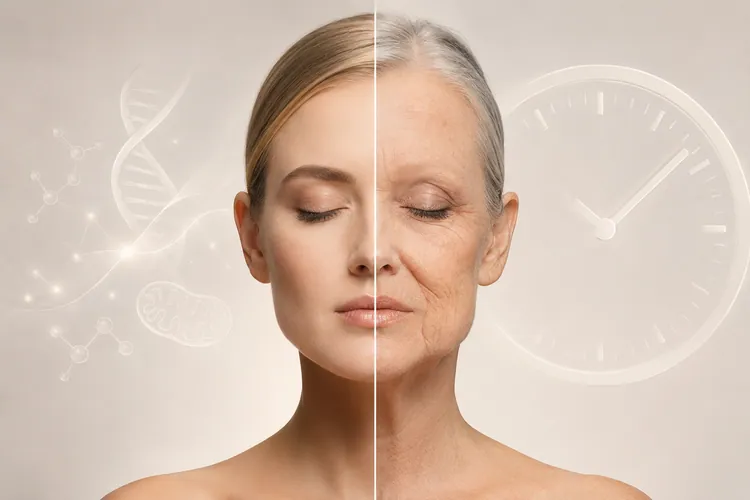
Research suggests it can. A 2016 analysis of four large studies in PNAS found that earlier menopause and surgical removal of both ovaries were linked to faster epigenetic aging in the blood, measured with a DNA-methylation “clock.” Its genetic analysis suggests menopause itself contributes, although cause and effect still need confirmation.
In the same PNAS study, women who had used hormone therapy showed a somewhat lower epigenetic age in cheek-cell samples. Biological age is different from the number of birthdays you’ve had; our guide to biological age vs. chronological age explains how it’s measured and why it matters.
Why are women in menopause spending more on longevity care?
Because they feel the changes first. In BCG’s survey, women in perimenopause or menopause adopted longevity care about 15% to 22% more often than other adults, tried more interventions and spent about $84 a month, compared with $68 for other women and $73 for men. Yet satisfaction sat at only about 50%.
Women in this stage tried about 3.3 more interventions than other women and 2.9 more than men. Fatigue, poor sleep, weight changes and brain fog are common reasons, and many women go looking for answers on their own when those symptoms aren’t addressed in a standard checkup.
Are longevity supplements working for women in menopause?
For most, not well enough. About 90% of American women in menopause have tried at least one consumable product, but only about 35% say it meets their needs. In a separate survey of about 1,000 U.S. women aged 50 to 64, only 22.4% said wellness products fully met their needs.
That second survey, by the wellness app Lasta, also found that the top requests were energy and wellbeing programs (22.8%) and guidance on hormonal changes and menopause (19.1%). Both are industry surveys, so the exact numbers are estimates, but the pattern is clear: women want help with energy and hormones, and few are getting it.
How does menopause affect energy and metabolism?
The transition can change how the body and brain use fuel. A small study of 43 women aged 40 to 60 found that women in perimenopause and after menopause had lower glucose metabolism in brain regions linked to Alzheimer’s risk, and lower activity of a key mitochondrial enzyme, than premenopausal women.
The PLOS ONE study was small and can’t prove cause and effect, but it suggests these changes may start during perimenopause, years before periods stop. That fits what many women describe: a dip in energy and mental sharpness that doesn’t match their effort. If you’re noticing similar changes, our checklist of 7 signs your body may be aging faster can help you spot patterns to discuss with a provider.
How does estrogen affect mitochondria?
Mitochondria turn food and oxygen into ATP, the energy molecule your cells run on, and estrogen helps regulate them. Estradiol can switch on genes that build new mitochondria and acts directly on mitochondrial DNA, so when estrogen falls, that support falls too.
According to a review in Redox Biology, this link between hormones and cellular health is easy to miss. Many supplements marketed for “cellular energy” target mitochondria directly, without considering that estrogen influences how many mitochondria a cell builds and keeps. That’s a big part of the gap in today’s longevity care for women.
Does hormone therapy help you live longer?
Menopausal hormone therapy (MHT) is a proven treatment for hot flashes and night sweats, and a large 2026 study found no increase in long-term mortality among users. But there’s no proof yet that it slows aging or extends life, and it isn’t recommended solely to prevent chronic disease.
For healthy women under 60 or within 10 years of menopause, the risks of MHT are low and the benefits likely outweigh them for bothersome symptoms, according to a 2021 review in Frontiers in Endocrinology. A 2026 BMJ cohort study that followed more than 800,000 Danish women for a median of 14.3 years found no higher mortality with MHT; after adjustment, the risk of death was actually lower. Still, it was observational and can’t prove MHT extends life.
The US Preventive Services Task Force recommends against using hormone therapy primarily to prevent chronic disease in postmenopausal women. Whether MHT is right for you depends on your age, time since menopause, health history, and the type and route of treatment, so it belongs in a conversation with your doctor.
| Menopausal hormone therapy | What the evidence shows |
|---|---|
| Hot flashes and night sweats | Effective – a well-established treatment |
| Safety in healthy women under 60 | Favorable – low risk in the right candidates |
| Long-term mortality | No increase in a large Danish cohort |
| Slowing aging or extending life | Unproven – needs more research |
| Preventing chronic disease | Not recommended for this purpose alone |
What is the best longevity plan for women in midlife?
The best-supported plan doesn’t require a new product: strength and endurance training, a symptom review with a clinician who is comfortable discussing hormone therapy, solid sleep, regular movement and enough protein. Cellular-health supplements work best as extras you track, not as the foundation.
- Train for strength and endurance. A meta-analysis in Osteoporosis International of 80 controlled trials with more than 5,000 postmenopausal women found that exercise, including strength training, improved bone density, especially at the spine and hip, in both early and late postmenopause.
- Get your symptoms assessed by a clinician who will discuss hormone therapy, including whether your age, timing and history make it a reasonable option.
- Cover the everyday basics: sleep, movement and protein. These 6 ways to feel younger after 40 and our guide to everyday habits that add years to your life make useful checklists. If sleep is a struggle, see how to sleep better.
- Treat cellular-health supplements as extras, and track whether they change anything you can measure, such as energy, sleep or lab results.
The $350 billion gap shows how poorly the market has met women’s needs. Plans that start with hormones and the basics, then add cellular support, fit what menopause actually changes in the body.
Can NAD+ help with menopause fatigue?
The evidence is still early. Oral NAD+ precursors raise NAD+ levels in the blood, but a 2026 systematic review found their effects on health outcomes inconsistent, and no studies have tested NAD+ for menopause-related fatigue specifically. It’s sensible to rule out other causes first.
NAD+ helps cells turn food into energy and repair DNA, which is why it’s popular in longevity care. Our article on NAD+ and low energy after 40 explains what the research does and doesn’t show. Fatigue in midlife can also come from low iron, thyroid problems, poor sleep or low vitamin B12, so a provider review is a good first step.
Support your energy and healthy aging with DoctorAdam
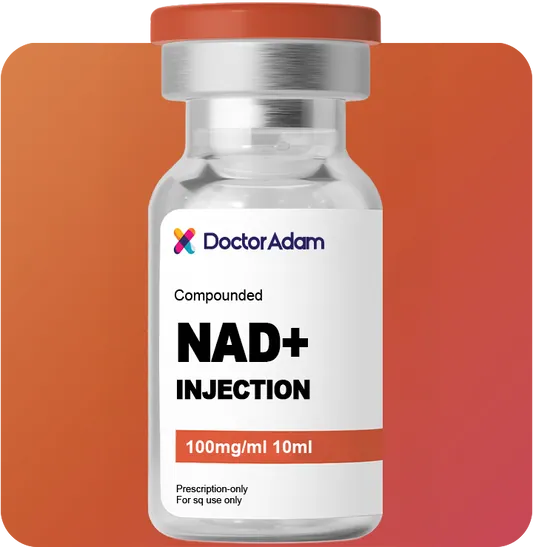
DoctorAdam’s U.S.-licensed providers offer longevity treatments online, including NAD+ as tablets, a nasal spray and injections, plus vitamin B12 injections. Start with a free online assessment and share your menopause history, so your provider can help you choose the options that make sense for you.
Begin on the DoctorAdam longevity page, or learn more about Revive NAD+ tablets, the NAD+ nasal spray, NAD+ injections and vitamin B12 injections. If treatment is appropriate, it’s delivered discreetly to your door, and your provider is available for follow-up questions.
Frequently asked questions
Does menopause speed up aging?
Studies link earlier menopause and surgical menopause with faster aging on DNA-methylation clocks, and a 2016 PNAS analysis suggests menopause itself contributes. These findings come from observational and genetic studies, so the size of the effect and the direction of cause still need confirmation.
Is hormone therapy safe for women in their 50s?
For healthy women under 60 or within 10 years of menopause, current reviews describe the risks as low and the benefits as likely outweighing them for bothersome symptoms. A large Danish cohort also found no increase in long-term mortality among users. Personal and family history still matter, so decide with a clinician.
Can NAD+ supplements help with menopause fatigue?
Oral NAD+ precursors raise NAD+ levels in the blood, but a 2026 systematic review found their effects on health outcomes inconsistent and identified no outcome trials of injected NAD+. No studies have shown a benefit for menopause-related fatigue specifically, so rule out other causes and discuss options with a provider.
Why do I feel so tired during perimenopause?
Falling and fluctuating estrogen can disrupt sleep, trigger night sweats and affect how cells produce energy. Low iron, thyroid problems and stress are also common causes, so a provider review and basic lab tests can help find the reason.
Does strength training help after menopause?
Yes. A meta-analysis of 80 controlled trials with more than 5,000 postmenopausal women found that exercise, including strength training, improved bone density at the spine and hip. It also helps maintain muscle, metabolism and balance.
What is the menopause gap in longevity care?
It’s the difference between what women in menopause spend on longevity products and how well those products meet their needs. BCG estimates about $350 billion in unmet demand, with only about half of users satisfied.
Sources
- Women’s longevity health market gap – Boston Consulting Group (2026)
- Survey of U.S. women aged 50–64 on wellness products – Lasta Research
- Menopause accelerates biological aging – Proceedings of the National Academy of Sciences (2016)
- Perimenopause and brain glucose metabolism and mitochondrial function – PLOS ONE
- Estrogen and mitochondrial function – Redox Biology
- Menopausal hormone therapy: benefits and risks – Frontiers in Endocrinology (2021)
- Menopausal hormone therapy and mortality in Danish women – BMJ (2026)
- Hormone therapy for the primary prevention of chronic conditions – US Preventive Services Task Force, JAMA
- Exercise and bone density in postmenopausal women: meta-analysis – Osteoporosis International
Dr. Jaclyn “Jaki” Leyson-Azuela, RMT, MD, MPH
Physician • Medical Writer • Public Health Professional
Dr. Jaclyn “Jaki” Leyson-Azuela, RMT, MD, MPH, is a physician, medical writer, and researcher with a strong background in public health, clinical medicine, and academic instruction. She has served as an Assistant Professor teaching core medical sciences, a Doctor-to-the-Barrio delivering frontline care in underserved communities, and a COVID-19 facility manager during the pandemic. Today she writes and reviews evidence-based health content to help readers make informed, confident decisions with their healthcare providers.
This article is for informational purposes only and does not replace medical advice. Prescription products require an online consultation with a licensed healthcare provider, who will determine whether treatment is appropriate for you.